Summary:
The Real Cost of DIY Tree Removal Accidents
When most Long Island homeowners consider DIY tree removal, they focus on the upfront savings. What they don’t calculate are the hidden costs that come with the territory. According to the Consumer Product Safety Commission, about 80% of tree trimming and removal injuries involve homeowners attempting their own tree care.
The numbers tell a sobering story. Every year, 36,000 people are injured in chainsaw accidents, and an average of 80 people die from tree-care activities in the United States. These aren’t just statistics—they represent families dealing with medical bills, lost wages, permanent disabilities, and worse.
Your homeowner’s insurance might not cover damages from DIY projects gone wrong, leaving you financially responsible for property damage, medical expenses, and potential lawsuits if someone else gets hurt on your property.
Why Trees Fall in Unexpected Directions
Even experienced DIY enthusiasts underestimate how unpredictable tree removal can be. A 2012 review by the Tree Care Industry Association found that two-thirds of victims who died while felling trees with chainsaws were killed by trees falling in directions they never intended.
Trees don’t follow the rules you’d expect. Wind conditions change in seconds. Internal rot weakens structural integrity in ways you can’t see from the outside. Root systems shift the tree’s center of gravity. What looks like a straightforward drop toward your neighbor’s yard can suddenly pivot toward your house, your car, or you.
We understand tree physics and biology in ways that weekend warriors simply don’t. We know how to read the subtle signs that indicate which way a tree will actually fall, not just which way it appears it should fall. We understand the “barber-chairing” phenomenon, where internal stress causes a trunk to split vertically with violent speed, often striking the person doing the cutting.
The angle of your cut, the tree’s lean, soil conditions, nearby structures, and even the time of year all affect how a tree will behave when it comes down. One miscalculation can turn a money-saving project into a life-changing disaster.
Equipment Failures and Ladder Accidents
Most homeowners don’t own the specialized equipment needed for safe tree removal, so they improvise. They use extension ladders on uneven ground, rent chainsaws they’ve never operated, or try to make do with hand tools that aren’t designed for the job.
Ladder-related accidents are among the most common DIY tree removal injuries. Even falling from a small height can cause serious injury or death. People get hurt when supporting branches break unexpectedly, when they stretch too far while working at height, or when cut branches strike their ladder and cause it to shift or collapse.
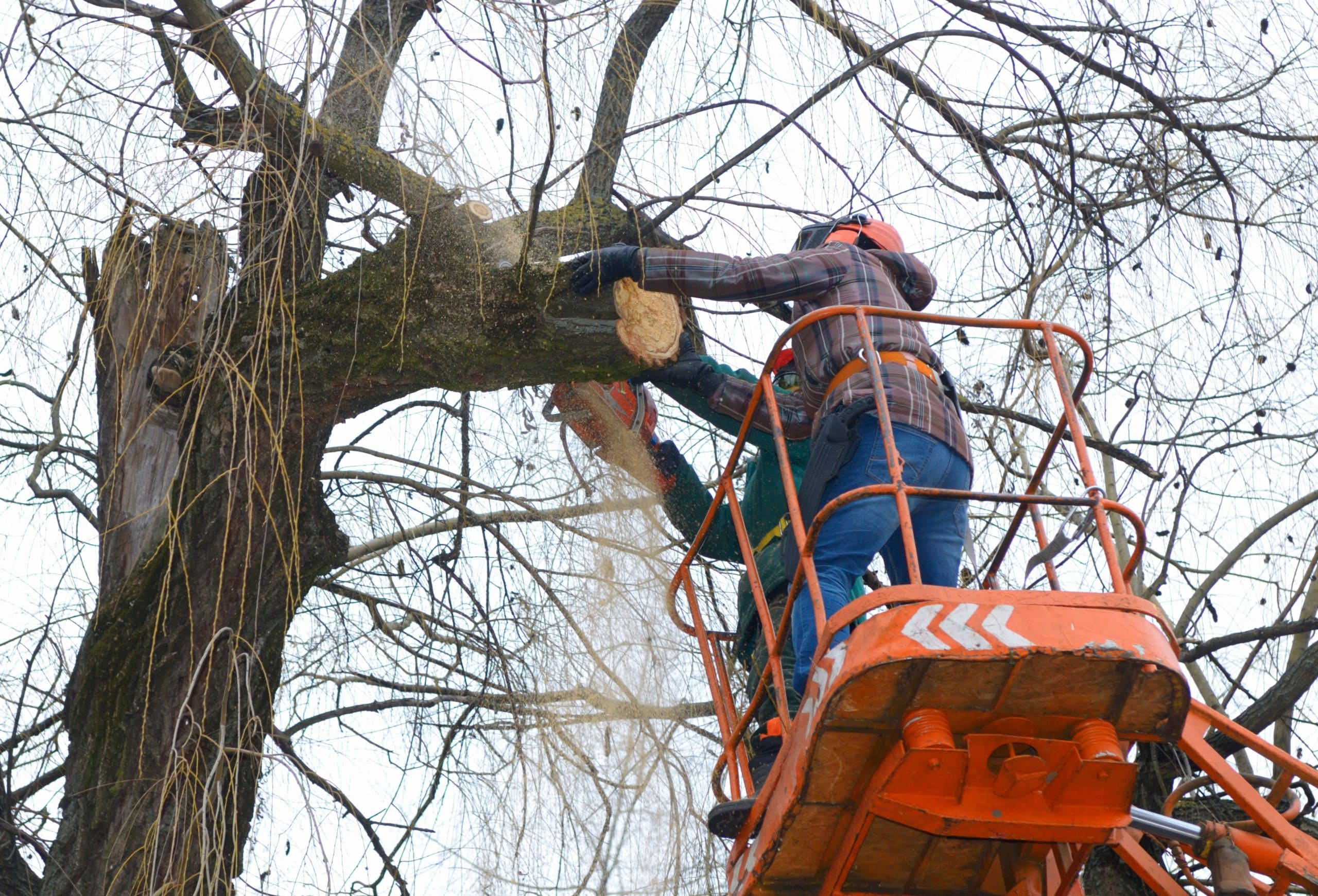
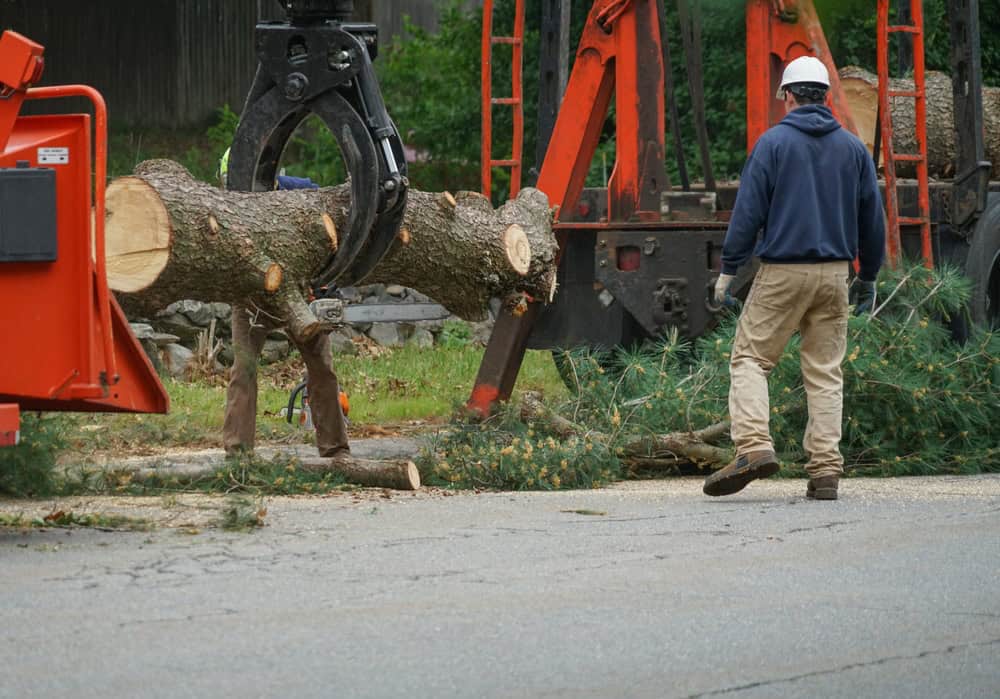
We use bucket trucks, cranes, and specialized rigging equipment that keeps our workers safe and gives us precise control over every aspect of the removal. We have backup safety systems, proper fall protection, and equipment designed specifically for tree work.
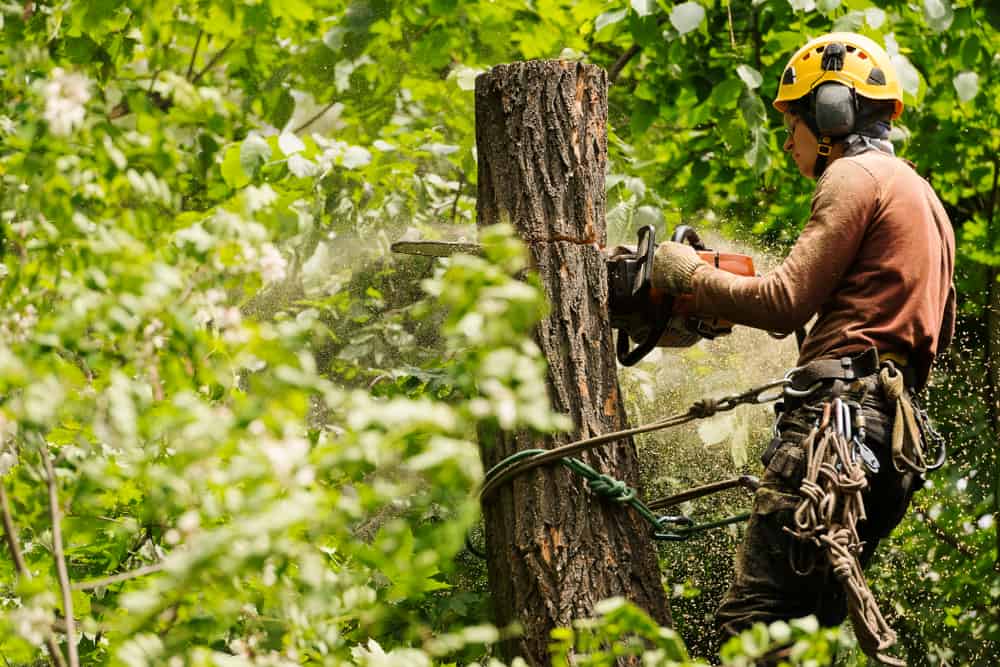
When you rent a chainsaw for the weekend, you’re not just getting an unfamiliar tool—you’re getting a piece of equipment that causes more injuries than almost any other power tool. Kickback is the leading cause of chainsaw injuries, and it happens when the saw’s chain catches on something and violently jerks the saw back toward the operator. Our arborists train for years to handle these tools safely.
When Professional Tree Service Becomes Essential
Some tree removal situations are simply too dangerous for DIY attempts, regardless of your skill level or confidence. We exist because certain scenarios require specialized training, equipment, and experience that can’t be learned from online tutorials.
The decision to call professionals isn’t about admitting defeat—it’s about recognizing when the stakes are too high for experimentation. Trees near power lines, large trees close to structures, storm-damaged trees, and diseased or dying trees all present unique challenges that can quickly become deadly for untrained homeowners.
With 15 years of experience, we bring the kind of specialized knowledge that keeps families safe and properties protected.
Power Lines and Electrical Hazards
Trees near power lines represent one of the most dangerous DIY scenarios possible. An electrical arc from a power line contains 25,000 watts of power reaching 2,000 degrees Fahrenheit. You don’t have to directly contact the line to be electrocuted—electricity can arc through the air, through wet branches, or through metal tools.
Many homeowners make the mistake of attempting to trim or remove trees away from power lines, thinking they can prevent branches from falling on their homes or cars. What they don’t realize is that even a three-quarter-inch diameter branch falling from a tree can cause serious injury or death, and the electrical hazards make the situation exponentially more dangerous.
We coordinate with utility companies when working near power lines. We understand minimum approach distances, we have the proper equipment to work safely around electrical hazards, and we know when a situation requires the power to be shut off before work can begin.
The survival rate for electrical contact incidents is not good—the fatal to non-fatal ratio for electrical accidents in tree work is 1 in 4, compared to the average of 1 in 14 for other tree work accidents. This isn’t a risk worth taking to save money on professional tree removal.
Storm-Damaged and Hazardous Trees
Long Island’s weather patterns create unique challenges for tree removal. Storm-damaged trees are unpredictable and unstable, often held up by other branches or structures in ways that aren’t immediately obvious. What looks like a simple cleanup job can quickly become a complex engineering challenge.
Dead or dying trees present their own set of hazards. These trees are brittle and unpredictable, with branches that can snap without warning and root systems that may have already begun to fail. We can identify the warning signs that homeowners miss—the subtle lean that’s increasing over time, splits in the trunk that indicate structural failure, or root damage that’s compromised the tree’s stability.
We provide 24/7 emergency response for storm situations because we understand that some tree hazards can’t wait for regular business hours. When a tree is leaning against your house or threatening to fall on power lines, every hour of delay increases the risk of catastrophic damage.
Professional assessment becomes critical in these situations. What might look like a manageable DIY project to an untrained eye could actually be a complex removal requiring cranes, specialized rigging, or coordinated utility shutoffs. The difference between professional evaluation and homeowner guesswork can literally be the difference between life and death.
Making the Right Choice for Your Family's Safety
The statistics don’t lie: DIY tree removal puts you at serious risk of injury, death, and financial liability. With 80% of tree-related injuries happening to homeowners attempting their own tree care, the question isn’t whether you’re capable of handling the work—it’s whether the potential consequences are worth the risk.
Professional tree services bring specialized equipment, years of training, and the kind of experience that keeps dangerous situations from becoming tragedies. When you’re dealing with something that could damage your home, hurt your family, or cost you everything, the smart money is on hiring professionals who do this work safely every single day.
We’ve spent 15 years building our reputation on exactly this kind of expertise and reliability. When the stakes are this high, trust the professionals who understand what’s really at risk.