
Summary:
The storm passes. The wind dies down. You walk outside, look around, and think — okay, we made it. But that tree in the backyard is leaning a little more than it was yesterday. There’s a large branch hanging by what looks like a thread over your roof. And you’re not sure if what you’re looking at is fine, or a disaster waiting to happen.
That uncertainty is exactly where the real risk lives. We’ve been working across Suffolk County for 15 years, and we’ve seen what happens when homeowners wait too long. This page is here to help you understand what to look for, what to do, and how to make a smart call before a close call turns into something worse.
What Storm Damage Actually Looks Like on Long Island Trees
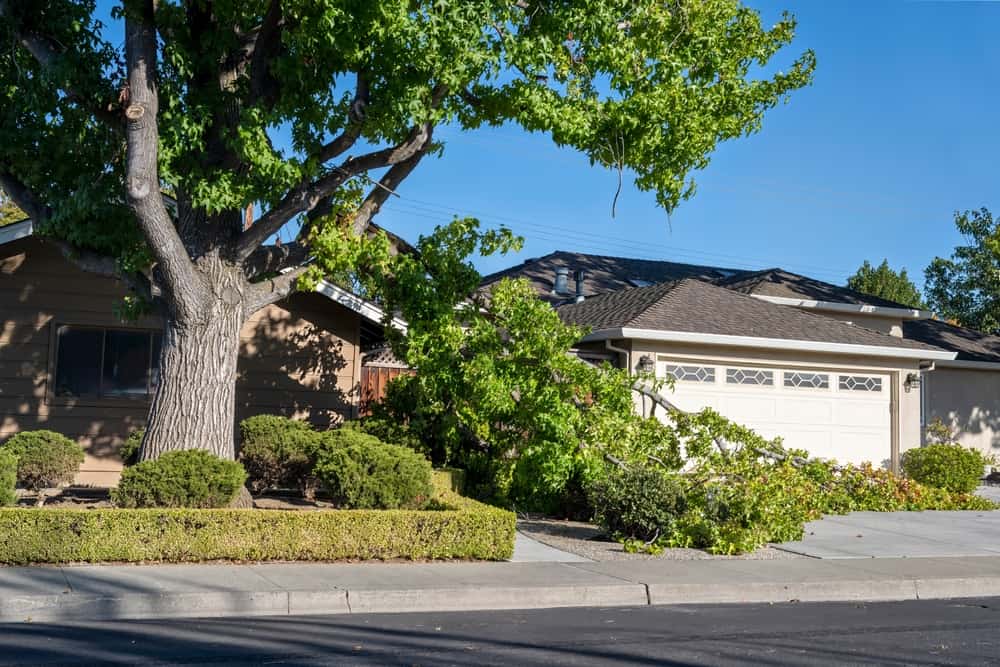
Most people picture storm damage as something obvious — a tree across the driveway, a branch through the fence, a root ball lifted clean out of the ground. And yes, those things happen. Suffolk County has weathered 45 hurricanes since 1930, and after major nor’easters like the one that triggered a state of emergency across the county in October 2025, the visible damage is hard to miss.
But the damage you can’t see is often the more dangerous kind. A tree that looks fine from the street may have a compromised root system, internal trunk stress, or hairline cracks that won’t show themselves until the next wind event — or a calm afternoon three weeks later. That’s the part most homeowners don’t expect.
Why Trees Fall After the Storm Is Already Over
Long Island’s soil is a big part of the problem. Much of Suffolk County sits on sandy, relatively shallow ground with a high water table. After a heavy rain event or a sustained nor’easter, that soil becomes saturated, and saturated soil loses its grip on root systems in a way that dry or clay-heavy ground simply doesn’t. A 40 mph gust in May — after a wet spring — can bring down a tree that would have survived a 60 mph nor’easter in December, simply because the ground underneath it has turned soft.
That’s not a freak occurrence. It’s a pattern we see every spring across communities from Centereach and Holbrook to Northport and Lloyd Harbor. The tree looked fine. Nobody was worried about it. Then the ground gave way.
Salt air adds another layer of stress that’s specific to homes near the Sound, the Bay, or the ocean. Coastal exposure weakens trees over time — gradually, invisibly — and that cumulative stress means a tree that’s been battered by salt air for decades may be far more fragile than it appears. If your property is anywhere from Northport Harbor to East Quogue to Montauk, that’s worth keeping in mind when you’re doing a post-storm walk-around.
The signs worth paying attention to include soil heaving or lifting around the base of the tree, new visible cracks in the trunk or major limbs, a lean that wasn’t there before, or bark that’s splitting in ways that look fresh. None of those things mean the tree is definitely coming down — but all of them mean you should have a certified arborist take a look before you decide it’s fine. An assessment costs nothing. A tree through your roof costs a lot more than that.
How to Spot a Storm Chaser Before They Take Your Money
After every major storm on Long Island, two things happen simultaneously: legitimate tree companies get slammed with calls, and unlicensed operators flood the market. They show up door to door, sometimes with branded trucks and printed estimates, targeting homeowners — particularly seniors — who are stressed, in a hurry, and not sure who else to call.
The warning signs are worth knowing. A contractor who demands a large cash deposit upfront before any work begins is a red flag. So is a quote that’s dramatically lower than everyone else’s — not because they’re efficient, but because they’re cutting corners on insurance, equipment, or cleanup. If someone can’t hand you a certificate of insurance on request, or if they pressure you to decide on the spot, those are reasons to pause.
Here’s the part that catches a lot of homeowners off guard: if an uninsured worker is injured on your property, you can be held liable. It’s not just about the quality of the work — it’s about protecting yourself legally. Verifying insurance before anyone sets foot on your property isn’t being difficult. It’s being smart.
The right tree company will answer your questions without getting defensive, give you a written estimate before work starts, and not ask for full payment before the job is done. They’ll have a local address, verifiable reviews across multiple platforms, and a track record in your area — not just a phone number and a truck. In a market where storm chasers are a real and recurring problem across Nassau and Suffolk counties, knowing what legitimate looks like is half the battle.
What a 24/7 Emergency Tree Service in Suffolk County Actually Does
Emergency tree removal isn’t just about showing up fast. It’s about having the training, equipment, and judgment to assess a situation safely — at any hour — and make the right call. That might mean removing a downed tree blocking your driveway at midnight, or it might mean stabilizing a hanging limb over a structure and coming back in daylight to finish the job properly.
We run 24/7 emergency response because Long Island storms don’t keep business hours. When the blizzard of 2026 knocked out power across Nassau and Suffolk counties, PSEG Long Island crews cleared 151 fallen trees and 107 large limbs. The homeowners who had an established relationship with a local tree service got prioritized. That’s not a small thing when demand spikes overnight and most companies are booked out for weeks.
What Happens When You Call Us After a Storm
When you call us after a storm, the first thing we do is listen. You tell us what you’re seeing — a downed tree, a hanging branch, a tree that’s leaning toward your house — and we ask the questions that help us understand the urgency and the scope before we arrive. We’re not trying to upsell you on a job you don’t need. We want to know what’s actually going on so we can bring the right equipment and the right people.
From there, we come out and assess in person. Our team includes ISA-certified arborists — not just chainsaw operators — which matters because a certified arborist is trained to evaluate tree health and structural integrity, not just remove whatever’s in the way. ISA certification requires a minimum of three years of hands-on arboricultural experience plus a rigorous written exam accredited by the American National Standards Institute. When one of our arborists tells you a tree is safe or unsafe, that’s a professional assessment, not a guess.
Once we’ve assessed the situation, we give you a clear, written estimate before any work begins. No vague ballparks that change when the crew shows up. No surprise charges after the fact. If the job is straightforward, we can often handle it the same day or the next morning. If it’s more complex — a large oak close to the house, a tree tangled in power lines, a root system that’s lifted and destabilized a section of your yard — we’ll walk you through exactly what’s involved and why.
And when the job is done, we clean up completely. Every branch, every wood chip, every piece of debris. Multiple customers have specifically called out our cleanup in their reviews, and that’s not an accident. Leaving your property the way we found it — or better — is part of the job, not an optional add-on.
Common Questions Suffolk County Homeowners Ask After a Storm
One of the most common questions we hear is: “How do I know if my tree is actually dangerous, or if I’m just being paranoid?” The honest answer is that you often can’t tell from the ground, and that’s not a failure of observation — it’s just the nature of tree damage. Root compression, internal decay, and stress fractures require a trained eye and sometimes specialized equipment to evaluate. If you’re asking the question, it’s worth a free consultation to get a real answer rather than spending the next six months wondering.
Another question that comes up frequently, especially after major storms across Suffolk and Nassau counties, is whether homeowner’s insurance covers tree removal. The answer depends heavily on your policy and what exactly happened. If a tree falls on a covered structure — your house, your garage, a fence — there’s a reasonable chance your insurer will cover some or all of the removal cost. If it falls in your yard without hitting anything, coverage is less likely. And if you’re removing a tree proactively because it’s hazardous but still standing, that’s almost never covered — even though it’s often the smartest financial decision you can make. A tree that costs $800 to $1,500 to remove today can cause $15,000 to $50,000 in damage if it comes down on your house.
People also ask whether they need a permit to remove a tree in Suffolk County. The answer varies by municipality. Some towns require permits for trees above a certain diameter or for removal in protected zones. We’re familiar with the requirements across the communities we serve — from Brentwood and St. James to Southampton and Manorville — and we’ll let you know upfront if a permit is part of the process. You shouldn’t have to figure that out on your own.
Finally, homeowners often ask whether the timing of removal matters. It does, but not in the way most people think. The safest time to remove a hazardous tree is before it becomes an emergency. The most cost-effective time for planned removal is late fall through early spring, when trees are dormant and lighter to handle. But if a storm has already compromised a tree on your property, the right time to address it is now — not after the next wind event makes the decision for you.
Finding a Tree Company in Suffolk County You Can Actually Count On
Long Island is a place where storms are a fact of life. Forty-five hurricanes since 1930. Nor’easters every fall and winter. A spring storm season that peaks from March through June, when saturated soil makes even modest wind events dangerous. If you own property in Suffolk or Nassau County, tree risk isn’t hypothetical — it’s a recurring reality that deserves a plan.
The right tree service isn’t just the one with the lowest quote or the fastest truck. It’s the one that answers your call at 11 PM, gives you a straight assessment without trying to oversell you, shows up with certified arborists and proper insurance, and leaves your property cleaner than they found it. That’s what we’ve been doing across Suffolk County for 15 years.
If you’ve got a tree you’re not sure about — or if a storm just came through and you want a professional set of eyes on your property — reach out to us. We offer free consultations, transparent estimates, and 24/7 availability for emergency situations. No runaround, no pressure. Just a straight answer from people who know Long Island trees.