Summary:
You’ve probably gotten a quote from a guy who showed up in an unmarked truck, gave you a number off the top of his head, and asked for half upfront. Maybe it worked out. Maybe it didn’t. Either way, you were rolling the dice.
Tree work on Long Island isn’t like hiring someone to paint a room. The stakes are higher, the equipment is heavier, and when something goes wrong — a branch drops on your car, a worker gets hurt on your property — the fallout can be significant. This page is here to help you understand what a legitimate tree company actually looks like, what questions to ask, and why the details matter more than most people realize.
What We're Required to Have as a Licensed Tree Company in Suffolk County
Suffolk County defines tree services — trimming, pruning, removal, stump grinding — as home improvement work. That means any tree company operating here, including us, is required to hold a proper Home Improvement Contractor license under Suffolk County’s framework. It’s not optional, and it’s not just paperwork. It’s the county’s way of holding contractors accountable to the people we work for.
Beyond licensing, we carry two types of insurance: general liability and workers’ compensation. These aren’t the same thing, and both matter to you as the homeowner. General liability covers damage to your property if something goes wrong during the job. Workers’ comp covers our crew — and this is the one most people overlook.
Why Our Workers' Compensation Insurance Protects You, Not Just Our Workers
Here’s something most homeowners don’t know until it’s too late: if a tree worker is injured on your property and the company doesn’t carry workers’ compensation insurance, you can be held legally responsible for their medical bills. Not the company. You.
New York State takes workers’ comp seriously, and the liability can fall directly on the property owner when a contractor skips coverage to keep their overhead low. That “great deal” you got suddenly looks very different when you’re dealing with a personal injury claim.
This is why asking for a certificate of insurance — sent directly from the carrier, not handed to you as a photocopy — is a non-negotiable step before any work begins. Call the insurance company directly if you have any doubt about whether the policy is current. It takes five minutes and can save you from a financial situation that takes years to sort out.
The same logic applies to general liability. If a crew member drops a limb through your fence, your roof, or your neighbor’s car, you need to know there’s a policy in place to cover it. We don’t hesitate to provide proof because we stand behind our coverage. Companies that hedge, make excuses, or hand you a faded photocopy are telling you something important.
On Long Island, where residential lots are tight and trees are often growing within feet of structures, pools, driveways, and neighboring properties, the margin for error is slim. A tree removal in Huntington or Northport isn’t like doing the same job on a rural acre in upstate New York — there’s a house on one side, a fence on the other, and a driveway in between. That’s the reality of working in Suffolk and Nassau Counties, and it’s why insurance isn’t a formality. It’s the foundation of the whole transaction.
What Our ISA Certified Arborists Know That a Chainsaw Operator Doesn't
The ISA — International Society of Arboriculture — administers one of the most rigorous credentialing exams in the tree care industry. Passing it requires demonstrated knowledge of tree biology, proper pruning technique, hazard assessment, disease and pest identification, and safe work practices. It’s not a certification anyone can buy or print on a business card. It’s tested, independently verified, and only maintained through continuing education.
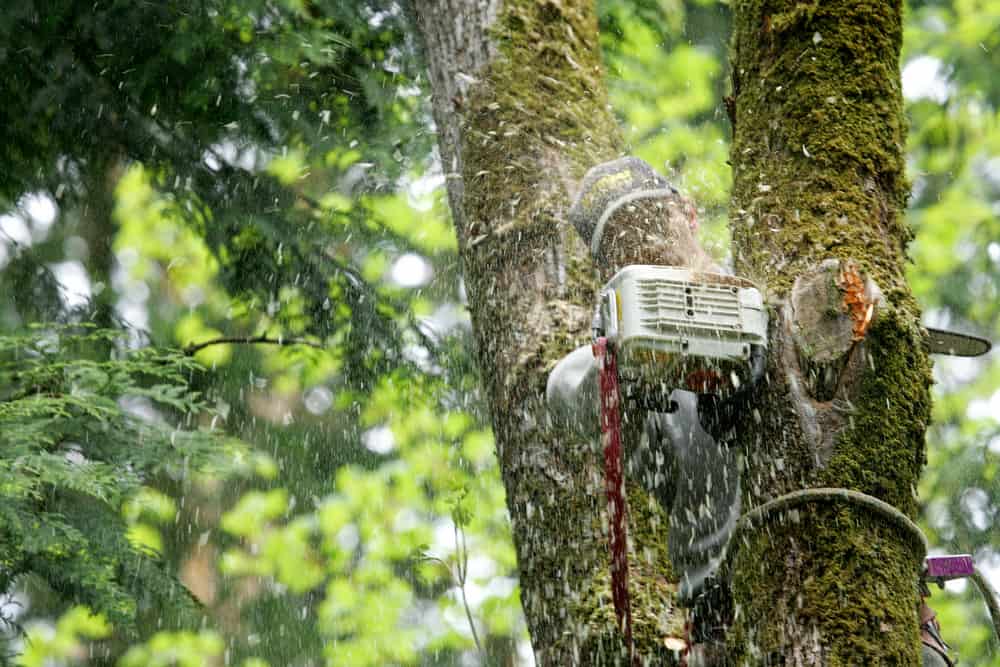
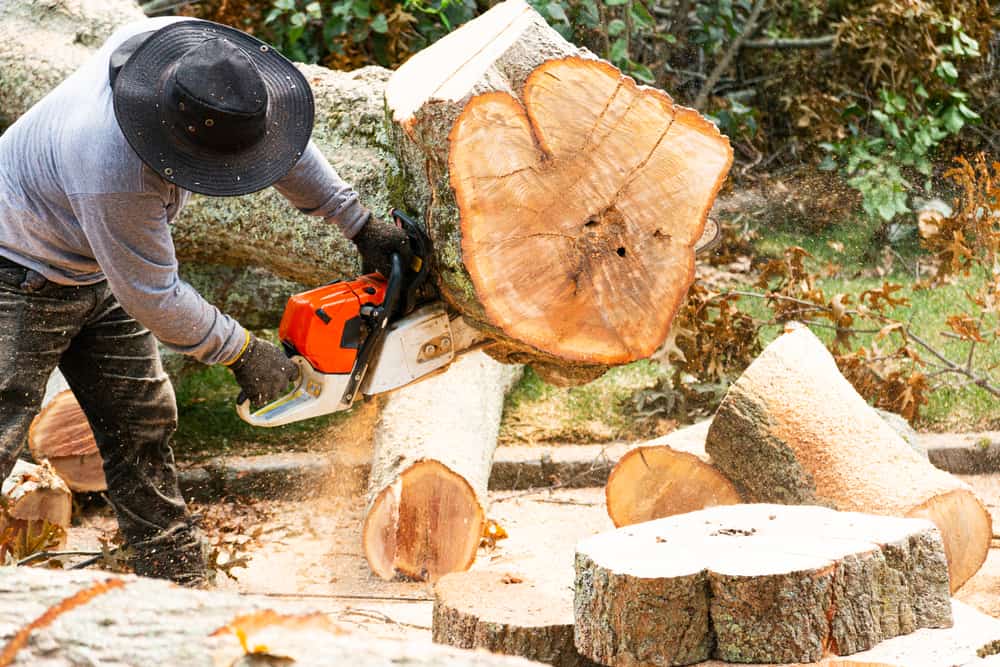
What does that mean in practice? It means our certified arborists understand how a tree responds to a cut — not just where to make it, but what happens to the tree afterward. We know which species are more prone to decay after pruning, how to identify structural weakness before it becomes a falling hazard, and how to plan a removal so the tree comes down in sections without touching anything it shouldn’t.
One example of why this matters: topping. Topping is the practice of cutting main branches back to stubs, and it’s rejected by every legitimate arboricultural organization as harmful. It creates large wounds the tree can’t properly heal, encourages rapid regrowth of structurally weak branches, and actually increases the hazard potential over time. Any company recommending topping as a standard service is telling you something about the level of knowledge behind their work.
On Long Island’s North Shore — in communities like Smithtown, St. James, and Port Jefferson — you’re often dealing with mature hardwoods: large oaks, maples, and beeches that have been growing for 60 or 70 years. These trees require a different approach than a young ornamental in a Nassau County backyard. Our certified arborists bring that species-specific, situation-specific knowledge to every job. You can verify any arborist’s ISA credentials directly through the ISA’s public database before you hire.
How to Read a Tree Removal Quote in Suffolk County and Nassau County
Price variation in tree service is real and wide. A quote of $400 and a quote of $1,800 for the same tree removal aren’t necessarily a sign that one company is ripping you off — they might reflect completely different scopes of work, different levels of coverage, or one company that simply isn’t carrying the overhead a legitimate operation requires.
The national average for tree removal runs roughly $750 to $1,200 per tree, with large or hazardous removals going well above $2,500. Emergency removal after storm damage typically costs 50 to 100 percent more than a planned job, because of the urgency, the added risk, and the complexity of working around whatever the storm left behind.
When Does Tree Removal in Suffolk County Require a Permit?
This is one of the most common questions homeowners ask, and the honest answer is: it depends on your town. Suffolk County is made up of ten towns — Huntington, Smithtown, Islip, Brookhaven, Babylon, Southampton, East Hampton, Riverhead, Southold, and Shelter Island — and each one has its own rules around tree removal permits.
Some towns require permits for trees above a certain trunk diameter. Others have protections in place for trees in coastal buffer zones or near wetlands, which is relevant for a significant number of properties on the South Shore and East End. Getting this wrong can mean fines, stop-work orders, and delays that cost more than the permit would have in the first place.
Permit fees themselves are relatively modest — generally around $25 for residential removal and $150 for commercial in many Suffolk County municipalities — but the process of knowing which form to file, which department to contact, and how long approval takes is where homeowners get tripped up. We know these requirements by town and can walk you through what’s needed before the job starts. That’s not a small thing. It’s the difference between a job that goes smoothly and one that gets complicated before the first cut is made.
If you’re in Nassau County, the permit landscape is slightly different but no less important. Mineola and the surrounding communities have their own municipal requirements, and assuming you don’t need one is a gamble worth avoiding.
How to Spot a Storm Chaser Before You Hand Over a Deposit
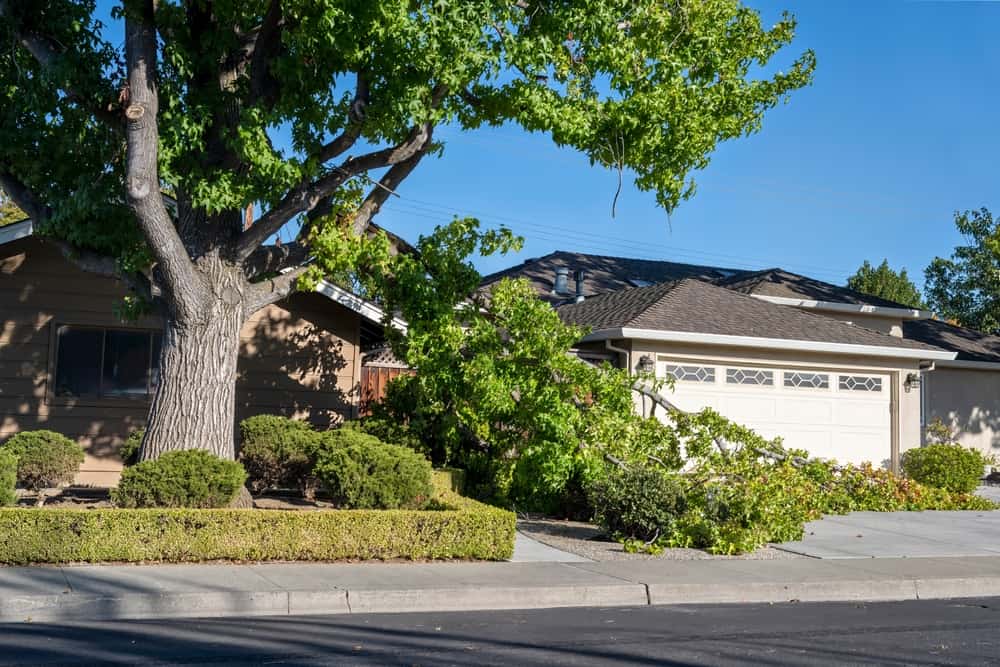
After every major nor’easter or tropical system that rolls through Long Island, unlicensed crews canvass neighborhoods in unmarked trucks, knocking on doors and offering fast, cheap tree removal. They quote low, ask for cash upfront, and in the worst cases, take the deposit and disappear. In the better cases, they do the work — without insurance, without credentials, and without any accountability if something goes wrong.
This isn’t a rare edge case. It’s a documented, recurring pattern in Nassau and Suffolk Counties that the New York State Department of Environmental Conservation has specifically warned homeowners about. The urgency of storm damage makes people more likely to act quickly and less likely to ask the right questions. That’s exactly what these operators count on.
A few things to check before agreeing to anything: Does the company have a physical address and a working phone number you can verify? Can they provide a certificate of insurance directly from their carrier, not a photocopy? Do they have reviews on a third-party platform — Google, Angi, Yelp — that go back more than a few months? Are they willing to put the scope of work and the price in writing before starting?
Legitimate tree companies don’t pressure you for an immediate decision. We don’t demand full payment before the job begins. And we don’t give you a firm price over the phone without seeing the tree. Any company that does any of those things is worth walking away from, regardless of how good the number sounds.
Long Island homeowners who’ve been through Sandy, or dealt with the aftermath of a bad nor’easter, know how quickly the situation can feel urgent. That urgency is real — but it’s also exactly when it pays to slow down for five minutes and verify who you’re actually hiring.
Finding a Tree Service in Suffolk and Nassau Counties You Can Actually Trust
Hiring a tree company doesn’t have to be a guessing game. The things that separate a qualified, accountable operation from a liability risk are verifiable — licensing, insurance certificates, ISA credentials, written estimates, real reviews from real customers. None of it is complicated to check. It just requires knowing what to ask.
Long Island’s combination of mature tree stock, tight residential lots, sandy glacial soil, and year-round storm exposure makes this a market where the quality of the company you hire genuinely matters. A tree that’s been growing in Northport or Centereach for 60 years, sitting 15 feet from a house, is not a job for someone without the right training, equipment, and coverage.
We’ve been serving Suffolk and Nassau Counties for fifteen years with certified arborists on staff and a track record you can read in our reviews. If you’re working through this decision right now — whether it’s a routine trimming, a removal that’s been on your list for a while, or something more urgent — give us a call.