Summary:
You look at your tree and think: it needs something. Maybe a branch is hanging too close to the roof. Maybe the whole thing just looks overgrown. So you search “tree trimming” or “tree pruning” — and suddenly you’re staring at a wide range of prices and services that all seem to blur together. Here’s the thing: trimming and pruning aren’t the same service. They have different goals, different timing, and sometimes a pretty different price tag.
Understanding the difference takes about five minutes and can save you from paying for the wrong thing — or worse, letting a crew do work that actually hurts your tree. We’ve been doing this work in Suffolk County for 15 years, and the distinction still matters more than most homeowners realize.
Tree Trimming vs. Pruning: What's Actually Different?
Trimming is about appearance. It’s the work you do to keep a tree looking neat — controlling its shape, clearing branches away from your house or fence, and managing growth so it doesn’t take over. Think of it as the equivalent of a haircut. The tree looks better when it’s done, and that’s mostly the point.
Pruning is about health and structure. It’s the selective removal of dead, diseased, crossing, or structurally weak branches — work that’s done to help the tree grow stronger and safer over time. A properly pruned tree doesn’t just look better; it’s more stable, more resistant to disease, and less likely to drop a limb on your car during a nor’easter.
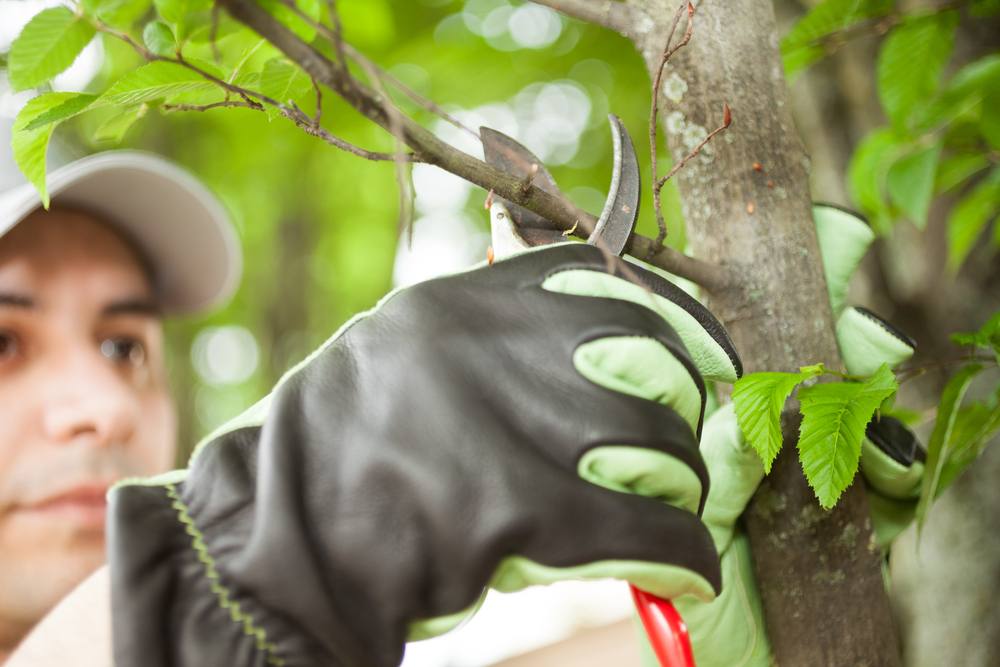
The tools are different too. Trimming typically involves hedge shears or hand pruners for smaller ornamental work. Pruning uses lopping shears, pruning saws, and sometimes larger equipment for mature trees. A crew that shows up with only hedge trimmers for a 40-foot oak isn’t there to prune it — they’re there to shape it, which may or may not be what the tree actually needs.
How Do You Know Which One Your Tree Needs?
The honest answer is that most trees need both at some point — just not always at the same time or for the same reason. If your concern is how the tree looks or where it’s growing, you’re probably thinking about trimming. If your concern is whether the tree is healthy, structurally sound, or potentially dangerous, you’re talking about pruning.
Pruning is usually the right call when you’ve got branches that are visibly dead or brittle. Those need to come out — not just for appearance, but because dead wood is the first thing that falls in a storm. If two major branches are rubbing against each other, one of them is eventually going to lose, and the wound it creates becomes an entry point for disease and pests. If the canopy is so dense that light and air can’t move through it, the tree is working harder than it needs to and is more vulnerable to fungal problems. These aren’t cosmetic issues. They’re structural ones.
Trimming makes more sense when the tree is basically healthy but it’s encroaching on something — your roofline, a power line, a neighbor’s yard, or a driveway where you need clearance. It’s also the right move for younger ornamental trees and shrubs where you’re trying to establish a shape.
In Suffolk County, timing matters too. Most tree species do best when pruned in late winter or early spring, while they’re still dormant. The wounds close faster, there’s less risk of spreading disease, and without leaves in the way, a trained arborist can actually see the branch structure clearly. Spring-flowering trees like dogwood and cherry are the exception — prune those right after they bloom, not before. Trimming for clearance or aesthetics can happen most of the year, though late summer and early fall are generally the worst time to do heavy work on most species because it pushes new growth that won’t have time to harden before winter.
One more thing worth knowing: a properly pruned tree should look like almost nothing happened. The natural shape stays intact. If you’ve ever seen a tree with all its main branches cut back to flat stubs, that’s not pruning — and we’ll get to why that matters in a moment.
What Does Tree Pruning Cost in Suffolk County, NY?
Tree pruning cost varies more than most homeowners expect, and the national averages you’ll find online don’t always reflect what you’ll pay on Long Island. Nationally, most homeowners spend somewhere between $400 and $900 per tree for professional pruning, with small trees running on the lower end and large or hard-to-access trees pushing well past $1,000. Those ranges are real, but they’re a starting point, not a quote.
In Suffolk County, a few factors push costs toward the higher end of those ranges. Labor costs on Long Island are higher than the national average. Mature trees — and there are a lot of them here, given that much of the county’s suburban housing stock dates back to the post-war era — require more skill, more time, and sometimes more equipment than younger trees. A 60-year-old oak in Stony Brook or a mature maple in Setauket that’s never been properly maintained is a very different job from a 20-year-old tree in a new development.
Proximity to structures matters a lot too. A tree that’s growing close to your house, a fence, or a PSEG Long Island utility line requires more careful work and carries more risk — which means more time and a higher price. Trees that are difficult to access, either because of the terrain or because they’re surrounded by other landscaping, also add to the cost. And if debris removal isn’t included in a quote, make sure you ask, because hauling away branches and wood chips is a real part of the job.
The number of trees on your property can work in your favor. When you’ve got multiple trees that need attention in the same visit, we factor in volume and the work becomes more cost-effective. If you’ve been putting off tree work for a few years and have three or four trees that could use some attention, getting them all assessed at once is almost always smarter than calling separately each season.
The single best way to get an accurate number for your specific situation is a free on-site estimate. There’s no reliable way to quote tree work without seeing the tree, the site conditions, and what actually needs to come out.
Tree Topping: Why It Harms More Than It Helps
Tree topping comes up more often than it should. A homeowner has a large tree that feels threatening, a company offers to “cut it back” at a low price, and a crew shows up and removes most of the upper canopy — leaving behind a row of flat stubs where the main branches used to be. It looks dramatic. It looks like something got done. And for a short time, the tree is smaller.
The problem is what happens next. Topping doesn’t reduce a tree’s hazard potential — it increases it. The ISA (International Society of Arboriculture), which is the professional body that sets standards for tree care, has been saying so for more than 25 years based on consistent research. Topping is explicitly identified as a violation of ANSI A300, the industry’s authoritative standard for tree care practices.
Why Tree Topping Makes the Problem Worse, Not Better
When you remove 50 to 100 percent of a tree’s leaf-bearing crown in a single cut, you’ve essentially starved it. The leaves are where the tree produces the energy it needs to survive, and cutting most of them off at once triggers a survival response. The tree pushes out what arborists call water sprouts — fast-growing, weakly attached shoots that emerge from just below the cut sites and grow rapidly to try to restore the lost canopy.
Here’s the problem with those water sprouts: they grow fast, but they attach to the tree at the surface rather than developing the deep structural connections that normal branches form over years. Within a few seasons, you’ve got a tree that’s back to roughly its original size — but now covered in branches that are far more likely to break in a storm than the ones you started with. You’ve traded a large, structurally sound tree for a large, structurally compromised one.
The large open wounds left by topping cuts are also entry points for decay and disease. Unlike proper pruning cuts, which are made at the branch collar and allow the tree to compartmentalize and seal the wound, topping cuts leave exposed wood that the tree often can’t close. Over time, decay works inward. The tree becomes hollow in sections. What looked like a solution has quietly become a bigger liability.
In Suffolk County, where nor’easters and summer thunderstorms regularly test every tree on your property, a topped tree is exactly the kind of structural problem you don’t want heading into storm season. The irony is that most homeowners agree to topping because they’re worried about safety — and the result is a tree that’s genuinely more dangerous than the one they started with.
We don’t top trees. Not because it’s a policy, but because it doesn’t actually solve the problem a homeowner is trying to solve. If a tree is too large, too close to a structure, or genuinely hazardous, there are real options — structural pruning to reduce the canopy weight selectively, crown thinning to improve airflow and reduce wind resistance, or in some cases, full removal. Any of those is a better answer than topping.
How to Spot a Tree Company That Knows What It's Doing
This is where a lot of homeowners get tripped up. Tree service is an industry where the gap between a knowledgeable crew and an unqualified one isn’t always visible until after the work is done. A few things are worth checking before anyone touches your trees.
Insurance is non-negotiable. If a worker is injured on your property and the company doesn’t carry proper workers’ compensation and liability coverage, you may be on the hook. Any reputable tree service should be able to show you proof of insurance before work begins — and if they’re reluctant to do that, take it as a clear signal.
ISA certification is the professional credential that matters most in this industry. An ISA Certified Arborist has at least three years of full-time experience in tree care and has passed a comprehensive exam covering tree biology, pruning technique, disease identification, and safety. It’s not legally required in New York, but it’s the clearest signal that the person assessing your trees actually understands them. The New York State Arborists chapter is the state’s ISA affiliate, and the NYSDEC specifically recommends hiring ISA-certified arborists for tree work.
Pay attention to how a company talks about your trees. A good arborist asks questions before recommending work — what are you worried about, what do you want the tree to look like, what’s happened to it in the past. They don’t walk onto your property and immediately recommend the most expensive option. They also don’t offer to top your trees as a solution to anything.
A few red flags worth knowing: any company that recommends topping as a way to “reduce” a tree is a company to avoid. A climber who uses spike spurs to climb a tree that’s being pruned (not removed) is damaging the tree with every step — spikes are appropriate for removal work, not live tree pruning. And any company that asks for full payment upfront before work begins is worth being cautious about.
In Suffolk County specifically, storm season tends to bring out opportunistic crews that go door to door after a nor’easter offering quick cleanup or “tree work” at low prices. Some of them are fine. Some are not insured, not trained, and not going to be reachable if something goes wrong. The BBB and New York State Arborists both flag post-storm door-to-door solicitation as a common scenario where homeowners end up with substandard or outright harmful work.
We’ve been working in Suffolk County for 15 years, and we’ve seen the aftermath of bad tree work more times than we’d like. The trees that were topped five years ago and are now structurally compromised. The stumps that were left because a crew didn’t have the equipment to finish the job. The property damage from an uninsured crew that nobody could track down afterward. Getting it done right the first time is almost always less expensive than fixing it later.
When to Call a Tree Service in Suffolk County
If you’ve been looking at a tree and wondering whether it needs trimming, pruning, or something more, the answer usually becomes clear once someone who knows trees actually looks at it. The terminology matters less than getting an honest assessment from someone who understands both the tree and what you’re trying to accomplish.
What we’ve covered here is the core of it: trimming shapes, pruning heals, and topping harms. Tree pruning cost depends on the tree’s size, condition, location, and what the work actually involves — and the only way to get an accurate number is an on-site look. Suffolk County’s coastal climate, mature tree stock, and storm exposure mean tree care here isn’t quite the same as anywhere else on the map, and the company you hire should understand that.
We offer free estimates and same or next-day consultations across Suffolk County. Fifteen years in, we still do this work the right way — which means we’ll tell you what the tree needs, not just what’s easiest to sell.