Summary:
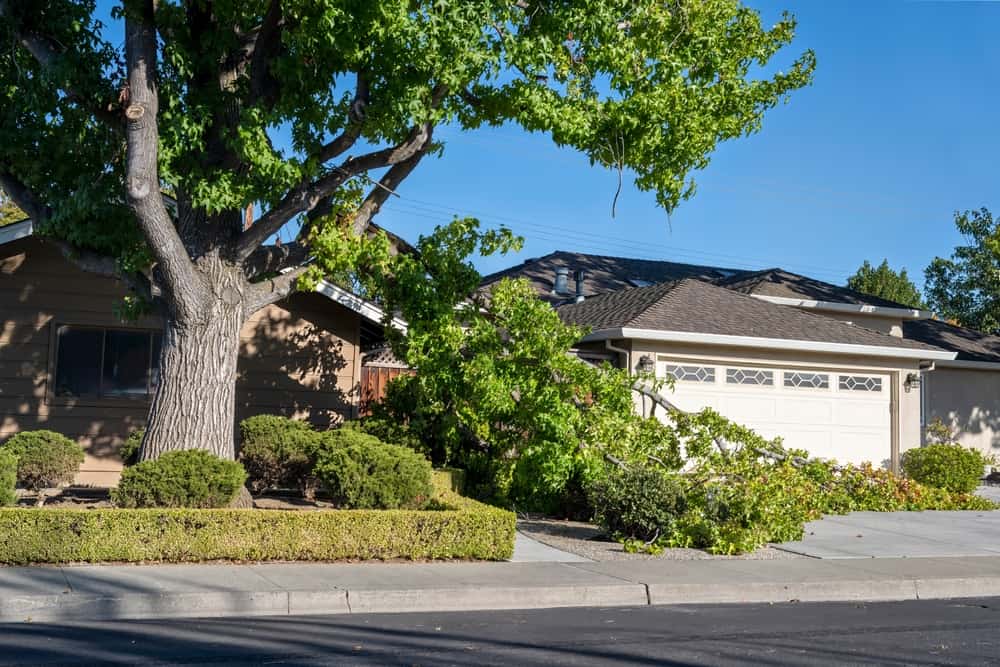
You walked outside after the storm and there it was — a neighbor’s tree on your fence, your car, or worse, your roof. Now you’re dealing with the damage, a stressed-out neighbor, and a pile of questions no one seems to have a straight answer to. Who pays? Do you call your insurance or theirs? Can you even make them do anything? If you’re in Suffolk County and you’re trying to figure this out, you’re in the right place. Here’s what New York law actually says — and what your smartest next move looks like.
Neighbor's Tree Falling on My Property — Who's Actually Responsible in New York?
This is the question everyone asks first, and the answer surprises most people. Under New York law, if your neighbor’s tree was healthy and it fell during a storm, the storm is considered an “act of nature.” That means your neighbor is generally not liable — and you’d be filing with your own homeowner’s insurance, not theirs.
The liability picture changes when the tree was already dead, diseased, or visibly compromised before it fell. If your neighbor knew — or reasonably should have known — that their tree was a hazard, and they didn’t do anything about it, that’s where negligence enters the picture. And negligence is what shifts the responsibility from your policy to theirs.
How Written Notice Can Change Everything About a Neighbor Tree Dispute
Here’s something most homeowners don’t know until it’s too late: the single most important thing you can do before a hazardous tree falls is put your neighbor on notice in writing. Not a text, not a conversation over the fence — a certified letter, ideally with dated photographs of the tree’s condition.
Why does this matter so much? Because New York courts look at whether the tree owner “knew or should have known” about the hazard. A certified letter with photos creates a legal record that they did know. Without that record, proving negligence becomes significantly harder, even if the tree was visibly rotting for years.
This is also where a professional arborist assessment becomes more than just a tree inspection — it becomes evidence. A written assessment from a qualified arborist documenting that a tree is dead, structurally compromised, or diseased is the kind of documentation that makes a written notice to your neighbor impossible to dispute. It’s not just “I think your tree looks bad.” It’s a professional’s written opinion that the tree posed a genuine hazard.
If you’ve been watching a dead or leaning tree on a neighbor’s property in Smithtown, Huntington, or Brookhaven and you’re worried about what happens next, this sequence matters: get the tree assessed by a professional first, then send the certified letter. That order gives you the strongest possible position — whether the situation ends up in an insurance claim, a legal dispute, or just a difficult conversation with your neighbor.
One more thing worth knowing: if you’ve already notified your neighbor about a hazardous tree and they’ve ignored it, and the tree then falls and damages your property, your insurance company may pursue your neighbor’s insurer through a process called subrogation. If that process succeeds, you could be reimbursed for your deductible. It’s not guaranteed, but it’s a real possibility — and it only exists when there’s a documented record of prior notice.
What to Do in the First 24 Hours After a Neighbor's Tree Damages Your Property
The morning after a storm is not the time to wait and see. What you do in the first 24 hours directly affects your insurance claim, your legal position, and how quickly the situation gets resolved.
First, stay safe. Don’t approach a fallen tree until you’re certain there are no downed power lines nearby. PSEG Long Island responds to utility-related tree emergencies, but until they’ve cleared the area, keep your distance. Once it’s safe, document everything — photograph the damage from multiple angles, the fallen tree itself, and if possible, the tree’s root system or trunk condition, which may show signs of decay that were present before the fall.
Next, call your homeowner’s insurance and report the damage. Even if you believe your neighbor may be liable, filing a claim with your own insurer first is often the practical move. Your insurer can pursue the neighbor’s insurance on your behalf if negligence is established. Be honest and thorough in what you describe — note whether the tree appeared healthy or showed signs of prior decay.
After that, notify your neighbor. Keep it factual and calm, and follow up in writing. If you believe the tree was already hazardous before it fell, document that observation in your written communication.
Then call a licensed, insured tree service. This part matters more than most people realize. A professional assessment while the evidence is fresh — before the debris is cleared, before the stump is ground down — captures the documentation that supports your claim. In Suffolk County, where nor’easters and tropical storms like Isaias in 2020 and Sandy in 2012 have caused widespread tree damage across thousands of properties, tree services that know the area and can respond quickly make a real difference. Waiting weeks for an assessment is not a position you want to be in.
One practical note: most homeowner’s insurance policies do not cover debris removal for a tree that falls in your yard without hitting a covered structure. If the tree landed in an open area and didn’t damage your house, fence, or shed, you may be responsible for removal costs out of pocket. It’s worth reviewing your policy before assuming coverage.
Neighbor's Tree Damaged My Property — What If It's Not a Fallen Tree?
Not all neighbor tree damage is dramatic. Some of it is slow, quiet, and expensive — and it doesn’t require a storm to happen. Root encroachment is one of the most common and underestimated sources of property damage in Suffolk County’s older, tree-lined neighborhoods. If a neighbor’s tree roots are cracking your driveway, pushing through your fence, or working their way into your foundation or pipes, you have legal options.
New York law generally recognizes that encroaching roots and branches — those that cross your property line — can constitute legal encroachment. You have the right to trim branches and roots back to your property line from your own side, but you cannot enter your neighbor’s property to do it without their permission.
Neighbor's Tree Roots Damaging My Property — What Are My Options?
Root damage tends to reveal itself gradually: a driveway that starts cracking in an unusual pattern, a fence post that shifts and leans without explanation, a plumbing line that backs up more often than it should. By the time most homeowners connect the damage to a neighbor’s tree, the roots have been encroaching for years.
Under New York law, if a neighbor’s tree roots are physically destroying your property — cracking a concrete driveway, compromising a foundation, or invading a plumbing system — the tree owner may be held responsible. The same negligence standard applies: if the neighbor knew or should have known about the encroachment and failed to act, they can be held liable for the damage.
The practical first step is documentation. A professional assessment that identifies the tree species, estimates the root spread, and connects the root system to the observed damage creates the same kind of evidence that matters in a fallen-tree dispute. Without that documentation, it’s your word against a neighbor who may genuinely not know their tree is causing the problem.
In Suffolk County, the dominant tree species in residential neighborhoods — red oak, white oak, Norway maple, and white pine — all have root systems capable of significant encroachment. Mature oaks in particular, which are common on property boundaries in older communities like Port Jefferson, Setauket, and Stony Brook, develop extensive lateral root systems that can travel well beyond the tree’s canopy. If you’re seeing unexplained cracking in your driveway or foundation near a large oak on a neighboring property, it’s worth having someone assess it before the damage gets worse.
One thing to keep in mind: trimming roots back to your property line is within your rights, but it should be done carefully. Aggressive root cutting can destabilize a large tree, which then becomes a falling hazard — and that creates a different problem entirely. A professional assessment will help you understand what’s safe to trim and what might require the neighbor to address the tree at its source.
Neighbor's Tree Is Damaging My Fence — Who Pays for the Repair?
Fence damage from a neighbor’s tree is one of the most common disputes in Suffolk County, and it plays out in a few different ways depending on how the damage happened.
If a branch or the entire tree fell onto your fence during a storm and the tree appeared healthy beforehand, the “act of nature” rule likely applies — meaning your homeowner’s insurance would cover the fence repair, subject to your deductible. Your neighbor’s liability only comes into play if you can show the tree was already in poor condition before it fell.
If the damage is coming from roots — roots that have grown under or through the fence structure over time — that’s a slower situation but potentially a stronger liability argument. Physical encroachment that destroys a structure is something New York courts take seriously, and a written record of the damage progression (photos over time, a professional assessment) strengthens your position considerably.
There’s also the question of the fence’s ownership. In many Suffolk County neighborhoods, fences sit directly on property lines, meaning both neighbors may share responsibility for the structure. If the fence is entirely on your property and a neighbor’s tree or roots damaged it, the liability analysis is cleaner. If ownership is shared or unclear, it adds a layer of complexity worth sorting out before you pursue a claim.
For trees that have physically grown into a fence — branches that have merged with fence posts, roots that have lifted sections of fencing — the practical reality is that removal and repair often need to happen together. Removing the encroaching branches or roots without addressing the fence leaves you with a damaged structure. Repairing the fence without addressing the tree means the same problem comes back.
If you’re dealing with this in a town like Huntington, Brookhaven, or Babylon, keep in mind that local tree ordinances may require a permit before any significant trimming or removal takes place — even on your own property. Knowing what’s required before you start work saves you from a separate headache on top of the one you’re already dealing with.
What Suffolk County Homeowners Should Know Before Making a Move
The short version: New York law does not automatically make your neighbor responsible for tree damage, but negligence — and the documentation that proves it — changes that equation entirely. Whether you’re dealing with a tree that just fell, a hazardous tree you’re watching nervously from your window, or roots quietly working through your driveway, the steps you take now determine your options later.
Document everything. Get a professional assessment early. Put your neighbor on written notice if the tree was already compromised. And don’t wait on the removal once you’ve made the decision — a tree that’s already failed or is visibly hazardous isn’t getting safer on its own.
If you’re in Suffolk County and you need someone to assess the situation, handle the removal, or help you understand what you’re looking at, we at Miguels Tree Service have been doing this work locally for over 15 years. We’re licensed, insured, and available 24/7 for emergencies. Reach out for a free estimate and we’ll take it from there.