Summary:
You got a quote for tree work and it felt high. So now you’re thinking — maybe handle the small stuff yourself, hire someone cheaper for the heavy lifting, and meet somewhere in the middle. It sounds reasonable. And honestly, it works out fine for a lot of home projects.
Tree work is different. The risks are real, the liability is specific, and Suffolk County and Nassau County have legal requirements for tree service that are stricter than most homeowners realize. Before you split that bill, it’s worth understanding exactly what you’re splitting — and what you might end up owning alone.
Why Tree Work on Long Island Carries More Risk Than It Looks
Tree work consistently ranks among the most dangerous trades in the country. The fatality rate for tree workers is roughly 80 deaths per 100,000 workers annually — compared to about 3.5 across all industries combined. That’s the reason professional training, proper equipment, and real credentials exist in the first place.
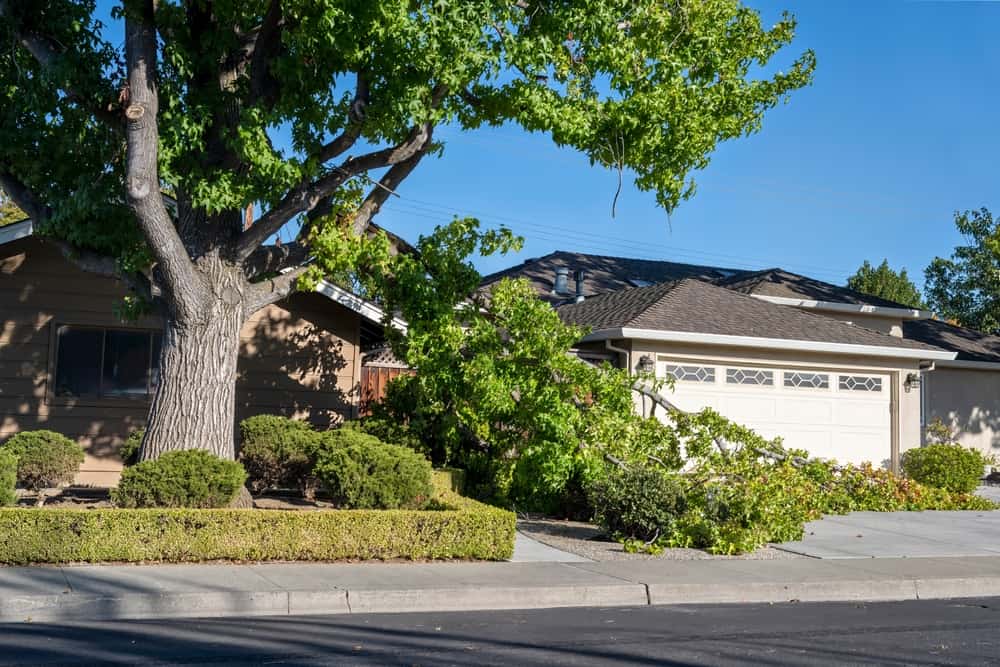
On Long Island, the risk profile is even more specific. Decades of nor’easters and coastal storms — including Sandy in 2012 and Ida in 2021 — have left a lot of structurally compromised trees standing on Suffolk County and Nassau County properties. A tree that looks fine from the yard can have root rot, internal decay, or storm-weakened branch unions that only show up under the right conditions. Or the wrong ones.
What Happens When an Uninsured Worker Gets Hurt on Your Property
This is the scenario most homeowners don’t think through until it’s too late. You hire a crew — maybe someone who knocked on your door after a storm, maybe someone a neighbor used — and they seem capable. The price is good. You shake hands and let them get to work.
Then someone falls. Or a branch comes down the wrong way. And now there’s an injured worker on your property with no workers’ compensation coverage.
In New York, when a contractor doesn’t carry workers’ compensation insurance, the liability for a workplace injury can fall directly on the property owner. That’s how the law works. A single chainsaw accident or fall from height can generate anywhere from $50,000 to $200,000 or more in medical costs. If the injured worker decides to pursue a claim, your property is the asset backing that exposure.
It gets more complicated when you factor in your homeowner’s insurance. Many policies in Nassau and Suffolk Counties specifically exclude coverage for incidents involving unlicensed contractors. So you hire someone to save a few hundred dollars, something goes wrong, you file a claim, and the insurance company pulls out the policy language that says they don’t cover it. The savings are gone. The bill is yours.
This isn’t hypothetical. It’s a pattern that repeats across Long Island every time there’s a major storm and unlicensed operators flood the market. After Ida came through in 2021, crews were going door to door in affected neighborhoods from Babylon to Brookhaven, offering fast work at low prices. Some of those jobs went fine. Others did not — and the homeowners who hired uninsured operators had very few good options when they didn’t.
The only way to close this exposure is to verify, before anyone touches a tree on your property, that the company carries both general liability insurance and workers’ compensation — and to get those certificates directly from the insurance carrier, not from a document the contractor hands you.
The DIY Part of the Job Is Where Most Injuries Actually Happen
A lot of homeowners draw the line somewhere in the middle. The big removal — hire a pro. The cleanup, the smaller branches, the stuff that feels manageable — handle it yourself. That logic makes sense on paper. In practice, the line between “manageable” and “dangerous” in tree work is not where most people think it is.
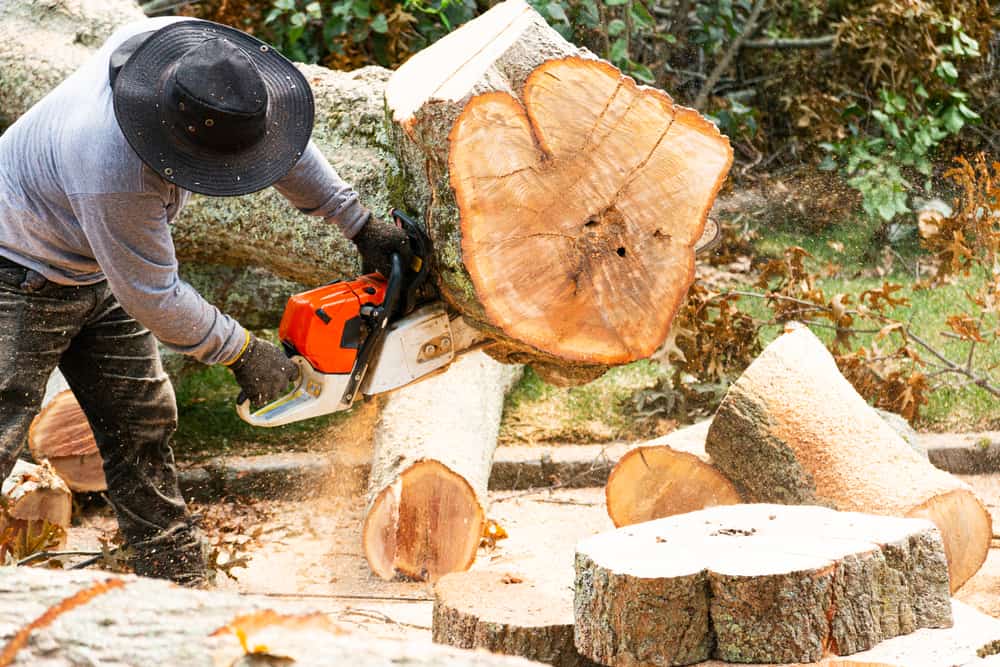
Struck-by incidents — meaning a branch, limb, or section of trunk that moves in an unexpected direction — account for roughly 40% of non-fatal tree work injuries. These happen to trained professionals with proper equipment and years of experience. They happen even more often to homeowners with a chainsaw they use twice a year and a ladder that isn’t rated for the weight they’re putting on it.
The physics of tree work are genuinely counterintuitive. A branch under tension can snap back with force you can’t anticipate. A tree leaning slightly in one direction can fall in another depending on where the cut is made and what’s holding it. A limb that looks dead and dry can weigh several hundred pounds. These aren’t things you figure out by watching a few videos — they’re things that take years of hands-on experience to read correctly.
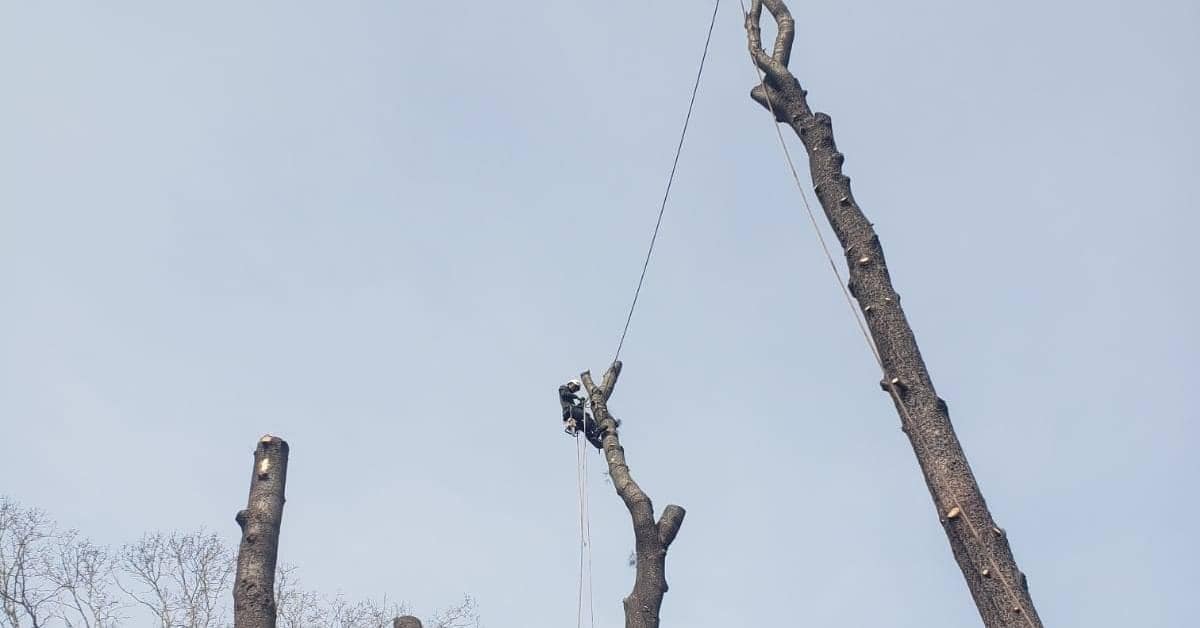
There’s also the equipment gap. Professional tree companies use specialized rigging, proper climbing gear, and machinery designed to control how wood moves when it’s cut. A homeowner with a chainsaw and a rope doesn’t have the same control, and the margin for error is much smaller. The injuries that result aren’t always dramatic — sometimes it’s a hand, a knee, a back — but they’re real, and they’re expensive, and they happen on properties across Suffolk County every year to people who thought they were handling the easy part.
If you’re going to do any tree work yourself, the honest advice is to limit it to what’s genuinely low-risk: light pruning of small branches you can reach from the ground, clearing debris after a professional has already done the cutting. Anything involving a chainsaw, a ladder, or a tree with any meaningful size or lean should be left to someone with the training and equipment to do it safely.
How to Verify a Tree Service Company Is Actually Licensed in Suffolk or Nassau County
Suffolk County requires all tree service companies to hold a Home Improvement Contractor License through the Office of Consumer Affairs. This isn’t a gray area — tree sprayers, pruners, stump removers, and general tree service operators are explicitly named in the county code. Nassau County has its own equivalent requirement through the Nassau County Department of Consumer Affairs.
Before any work starts, you can verify a contractor’s license status directly through either county’s consumer affairs office. We carry current general liability insurance and workers’ compensation, and we provide certificates issued directly from our insurance carrier — not a printed document from our own files. This is what you should expect from any legitimate tree service company.
Do You Need a Permit to Remove a Tree in Suffolk or Nassau County?
This is one of the most common questions homeowners ask — and one of the most important to get right before any work begins.
The short answer is: it depends on where you are. Many municipalities within Suffolk County and Nassau County have their own tree preservation ordinances that require permits before removing trees above a certain diameter, trees in protected zones, or specific species. These rules exist at the town and village level, which means the requirements in Huntington can be different from those in Babylon, Islip, or Smithtown. Nassau County communities like Garden City, Oyster Bay, and Hempstead each have their own regulations as well.
The permit requirement is the homeowner’s responsibility — not the contractor’s. If a tree is removed without the required permit, the fine and any mandatory replanting order come back to you, regardless of who did the cutting. An unlicensed operator who skips the permit process and disappears after the job is done leaves you holding that exposure alone.
We know which permits are required for your specific municipality in Suffolk or Nassau County, pull them before work begins, and handle the process as part of the job. This is one of those details that sounds administrative but has real financial consequences when it’s skipped. Fines for unpermitted tree removal in some Long Island municipalities run into the hundreds or thousands of dollars, and replanting orders can require replacing a mature tree with multiple new plantings at the homeowner’s expense.
If a contractor you’re considering doesn’t bring up permits at all, that’s worth noting. It’s either a sign they don’t know local regulations — which is a problem — or a sign they’re planning to skip the process, which is a bigger one.
What Separates a Legitimate Tree Company From a Low-Bid Operator
The price gap between tree service quotes on Long Island can be significant — sometimes the difference between the highest and lowest bids for the same job runs into the thousands of dollars. That gap can feel arbitrary, but it usually isn’t. It reflects real differences in what the company is actually bringing to the job.
A fully licensed and insured tree company is carrying the cost of workers’ compensation premiums, general liability coverage, properly maintained equipment, and in many cases, the salaries of ISA Certified Arborists — professionals who have passed a comprehensive examination covering tree biology, risk assessment, pruning standards, and safety practices, and who maintain that credential through ongoing continuing education. Those costs are built into the quote. A low-bid operator who’s skipping licensing, skipping insurance, and using a crew without formal training can undercut that price easily — because they’re not carrying any of those costs. They’re offloading the risk onto you.
There are a few specific things worth checking before you commit to any tree company. Ask whether they employ ISA Certified Arborists. Ask for their Suffolk County or Nassau County Home Improvement Contractor license number and verify it. Request insurance certificates sent directly from their carrier — not a copy they hand you. Ask what cleanup is included and whether it’s part of the quoted price or an add-on.
A company that’s been operating legitimately in this market for any length of time will answer all of those questions without hesitation. A company that gets evasive, changes the subject, or offers to knock more off the price instead of providing documentation is telling you something important.
We’ve served Suffolk County for 15 years and seen what happens when homeowners skip this process — and it’s almost always more expensive than the quote they were trying to avoid. The tree service industry was ranked sixth on the Better Business Bureau’s most complained-about industries list, largely because of operators who exploit the fact that most homeowners don’t know what to verify. Knowing what to ask for closes that gap significantly.
Hiring a Tree Company in Suffolk or Nassau County: The Bottom Line
Tree work on Long Island isn’t a category where splitting the difference usually pays off. The combination of real physical danger, specific county licensing requirements, insurance policies that exclude unlicensed contractors, and municipal permit rules creates a situation where cutting corners tends to cost more than the original job would have.
The good news is that verifying a legitimate tree company isn’t complicated. Check the license, request the insurance certificates, ask about permits, and get the scope of work in writing. Those four steps will filter out most of the operators who shouldn’t be on your property in the first place.
If you’re dealing with a tree situation in Suffolk County or Nassau County and want a straightforward assessment from a team that’s been doing this work locally for 15 years, we’re ready to take a look. No pressure, no guesswork — just an honest conversation about what your property actually needs.