Summary:
You know the yard. Maybe it’s yours. Trees that haven’t been touched in years, dead branches hanging over the driveway, a canopy so thick the grass underneath gave up long ago. It doesn’t happen overnight — it creeps up on you. And then one day you’re standing in your driveway thinking, “How did it get this bad?”
Here’s the thing: it’s a more common situation than most Long Island homeowners realize, and it’s also more fixable than it looks. What follows is an honest look at what professional tree care actually involves, what to expect from a tree company worth hiring, and what makes the difference between a yard that turns heads and one that turns stomachs.
What Our Professional Tree Company Actually Does for Your Property
Tree service is one of those industries where the range of quality is enormous. On one end, you’ve got certified arborists with years of training and proper equipment. On the other, you’ve got guys with a truck and a chainsaw who’ll be gone before the sawdust settles. The difference matters — especially in Suffolk County and Nassau County, where mature trees, coastal storms, and strict county licensing requirements make this more than just yard work.
We do more than cut things down. We assess what’s actually going on with your trees — which ones are healthy, which ones are stressed, which ones are quietly becoming a hazard — and then we give you a clear plan before anyone picks up a tool.
Tree Trimming and Pruning: More Than Just Making It Look Nice
Most homeowners think of trimming as cosmetic. And sure, a well-pruned tree looks significantly better. But the real reason to prune regularly has more to do with health and safety than aesthetics.
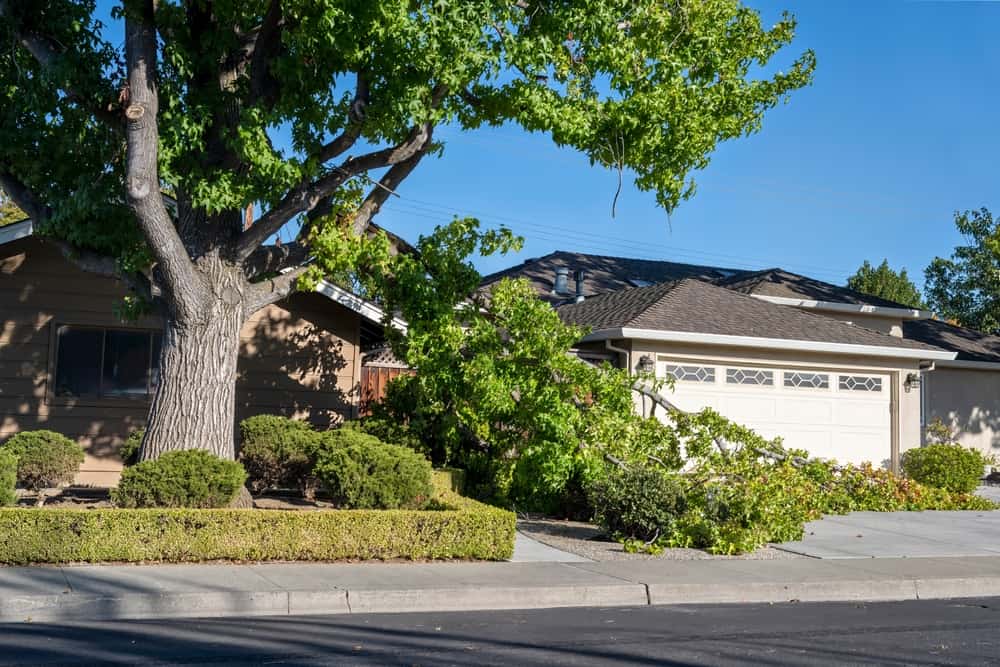
Dead branches don’t announce themselves before they fall. They sit up there — over your car, your roof, your kids’ swing set — until a nor’easter or a summer thunderstorm makes the decision for them. Proper pruning removes those risks before they become your problem. It also improves airflow through the canopy, which reduces the conditions that invite disease and pest infestation. A tree that gets regular attention lives longer and causes fewer headaches.
In Suffolk County, where white oaks, red maples, and Norway maples dominate most residential lots, this matters even more. These species can live for decades, but they need periodic attention to stay structurally sound. An oak that was planted when a Smithtown or Huntington neighborhood was first developed in the 1950s is now 70-plus years old. That’s a tree worth caring for — and one worth monitoring carefully.
The process itself isn’t complicated when done right. We identify which branches are dead, crossing, or growing in ways that create structural problems. We remove what needs to go, shape what stays, and leave the tree better off than we found it. What we don’t do is top the tree — a practice that looks dramatic but actually causes long-term damage and is considered a red flag in the professional arboriculture world.
Tree Removal in Suffolk County: When It's Time to Let a Tree Go
Not every tree can be saved, and not every tree should be. Sometimes the right call is removal — and making that call sooner rather than later is almost always the smarter financial and safety decision.
The most common reasons homeowners in Suffolk County and Nassau County end up removing trees are storm damage, disease, root systems threatening foundations or sewer lines, and trees that have simply outgrown the space they were planted in. Superstorm Sandy put this in sharp focus for a lot of Long Island families back in 2012. Trees that looked fine from the outside came down on houses, cars, and fences because the root systems or internal structure had already been compromised. Many homeowners have been more proactive about tree risk assessment ever since.
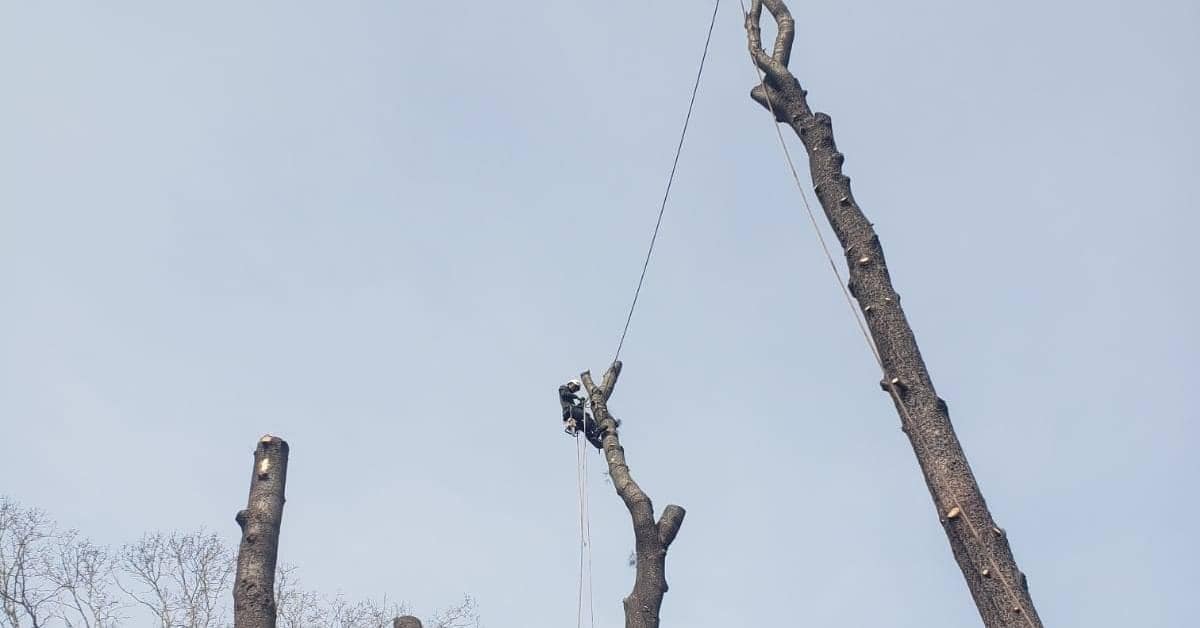
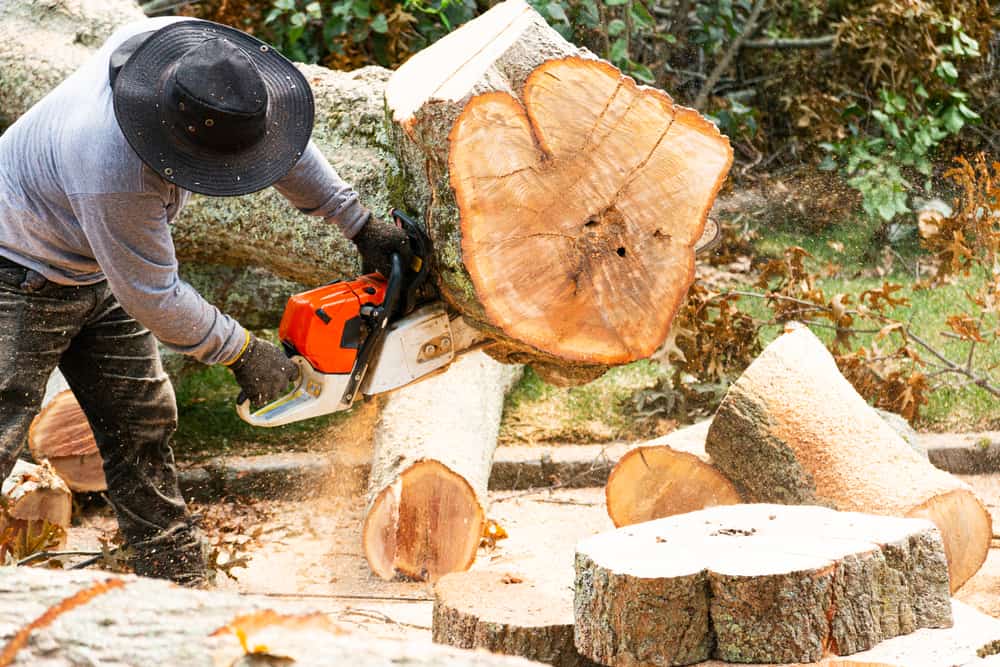
Our removal process is methodical. We evaluate the tree for the safest removal approach — particularly important when it’s close to a structure, a fence, or a utility line. We use rigging and lowering techniques to bring sections down in a controlled way rather than just dropping the whole thing and hoping for the best. Then the stump gets ground down so you’re not left with an eyesore and a tripping hazard where a tree used to be.
One thing many homeowners don’t think about upfront: permits. Depending on which municipality you’re in across Suffolk or Nassau County, you may need approval before removing a tree — particularly for larger specimens or trees near the street. We know the local rules in every community we serve. We handle that part so you don’t have to figure it out yourself.
How to Choose the Right Tree Service on Long Island
This is where a lot of homeowners get tripped up. You search, you get a few names, someone gives you a low quote, and you go with it. Sometimes that works out. Sometimes you end up with a crew that leaves a mess, does shoddy work, or — worse — causes damage and disappears.
New York State specifically requires contractor licensing in Suffolk and Nassau counties. That’s not a suggestion — unlicensed operators are working illegally in those jurisdictions, and if something goes wrong on your property, your homeowner’s insurance may not cover it. The first question to ask any tree company isn’t about price. It’s whether they’re licensed and insured, and whether they can prove it directly from their insurer.
What Separates a Trustworthy Tree Company From a Risky One
The honest answer is that a few key signals separate a company worth hiring from one worth avoiding — and most of them have nothing to do with price.
Years in business matters. A company that has operated in Suffolk County for 15 years has completed thousands of jobs, built a local reputation, and proven they’re not going anywhere. Compare that to a seasonal operator who showed up after a storm and will be gone by spring. Longevity in a competitive local market like Long Island isn’t luck — it’s the result of doing the work right, consistently, over a long period of time.
Certification matters too. ISA Certified Arborists have passed a rigorous exam covering tree biology, diagnosis, pruning standards, and safety. We maintain continuing education to keep that credential current. When a company says they have certified arborists on staff, that’s a meaningful claim — not just a marketing line.
Communication is one of the most underrated factors, and it shows up in reviews constantly. Homeowners who’ve had great experiences almost always mention that the company showed up when they said they would, kept them informed, and didn’t leave them guessing. One of our customers put it plainly: “Miguel kept me informed as to when he was available to do the tree work.” That kind of reliability is what makes people refer their neighbors.
Cleanup is the other thing that separates professionals from everyone else. We remove every branch, every leaf, every piece of debris before we leave. Your yard should look better when we’re done — not like a storm just hit it.
Common Questions Suffolk County and Nassau County Homeowners Ask Before Hiring
A few questions come up constantly, and they’re worth answering directly.
How much does tree removal cost in Suffolk County? The range is wide — typically somewhere between $500 and $2,500 depending on the size of the tree, how close it is to a structure, and how complex the removal is. Any company that quotes you a firm number over the phone without seeing the tree first is guessing. Get a written estimate after an in-person assessment. That’s the only number worth comparing. In Nassau County, pricing follows similar patterns, though proximity to utilities and property density can shift costs in either direction.
Do I need a permit to remove a tree in Nassau or Suffolk County? It depends on your specific municipality. Some towns require permits for trees above a certain diameter, trees near the street, or trees within certain setbacks from property lines. Heritage trees — older, larger specimens — often have additional protections. We know the local rules across the communities we serve in Suffolk County, from Hauppauge and Smithtown to Huntington and Babylon, and we can tell you exactly what’s required before any work begins.
Is tree trimming really worth it, or is it just an upsell? It’s worth it — and the property value data backs that up. Well-maintained trees and landscaping can increase a home’s value by up to 14%. On Long Island, where median home prices regularly clear $600,000, that’s not a small number. Beyond value, properly maintained trees are less likely to fail during a storm, which means less risk to your home, your car, and your family.
What should I do if a storm damages my trees? Call a tree company that offers emergency service — ideally one you already have a relationship with. If a branch is on your roof or a tree is blocking access to your home, that’s not a situation that can wait for a scheduled estimate. We’re available 24/7 for exactly that reason. After the immediate hazard is handled, a full assessment of remaining trees is a smart next step, because storm damage often weakens trees in ways that aren’t immediately visible.
Ready to Stop Looking at That Tree and Start Doing Something About It?
Most homeowners who reach out to us waited longer than they should have. Not because they didn’t care — but because they weren’t sure who to trust, didn’t know what it would cost, or just kept putting it off. That’s understandable. It’s also fixable.
If you’ve got trees that need attention — whether it’s a routine trim, a removal you’ve been putting off, or a storm situation that needs immediate eyes on it — the first step is a conversation. No pressure, no obligation, just an honest assessment of what’s going on and what it would take to make it right.
We’ve been doing this work in Suffolk County and Nassau County for 15 years. We’re licensed, insured, and staffed by certified arborists who know Long Island’s trees, its storms, and its communities. Reach out to us and let’s take a look.