Summary:
Most people can tell an oak from a pine. But ask a Suffolk County homeowner whether that large tree along their property line is a red oak or a white oak — or whether that ash in the backyard has been checked for emerald ash borer — and the answer is usually a shrug.
That’s not a knock on anyone. Trees are easy to overlook until something goes wrong. But in Suffolk County, where nor’easters roll through every winter and invasive pests are actively working through the local tree canopy, not knowing what you have can turn into a real problem. This guide is here to change that.
Common Native Trees in Suffolk County and How to Tell Them Apart
Long Island sits at an interesting ecological crossroads. The north shore towns like Smithtown and Huntington have heavier, clay-rich soils left behind by glacial moraines. Head south or east toward Brookhaven and Riverhead, and the soils turn sandy and nutrient-poor — the kind of conditions that define the Long Island Pine Barrens. These differences aren’t just geography. They shape which trees grow where, how deep their roots go, and how they hold up under stress.
Knowing your tree starts with knowing your ground. A red oak growing in the clay-heavy north shore is dealing with entirely different conditions than a pitch pine rooted in the sandy outwash plains of the Pine Barrens. Same county, very different trees.
Oaks, Maples, and Cherries: Identifying Suffolk County's Most Common Natives
Red oak is probably the most common native upland tree in Suffolk County. It has pointed, multi-lobed leaves with bristle tips — the little hair-like points at the end of each lobe are the easiest way to tell it from a white oak, which has rounded lobes and no bristles. Red oaks tend to grow large and fast, and a mature specimen on a residential lot can add significant value to a property. They’re also one of the trees most affected by oak wilt, which has killed red oaks across Long Island in recent seasons. If you see rapid browning and leaf drop starting at the top of a red oak canopy in summer, that’s worth getting looked at quickly.
White oak is slower-growing and longer-lived, with a broader, more spreading crown. It tolerates a wider range of soil conditions and tends to be more drought-resistant than red oak. Scarlet oak and black oak also appear across Suffolk County’s upland forests, and they’re easy to confuse with red oak — the leaf shape is similar, but scarlet oak has deeper sinuses between the lobes, giving the leaf a more dramatic, almost star-like look.
Red maple is everywhere on Long Island — it grows in upland forests, wetland edges, and suburban yards alike. The leaves have three to five lobes with a classic maple shape, and the tree puts on a vivid red show in fall. It’s a tough, adaptable native, but it does tend to develop co-dominant stems (two trunks growing from the same base) that can become a structural problem as the tree matures. That’s worth knowing before a storm season arrives.
Black cherry is a native species that shows up frequently in Long Island’s secondary forests and along woodland edges. It has narrow, finely serrated leaves and dark, almost scaly bark on mature trees. It’s not a particularly long-lived landscape tree, but it’s ecologically valuable — birds rely heavily on its fruit. Black tupelo, also called black gum, is another native worth knowing. It has simple, oval leaves that turn a brilliant scarlet in early fall, often before any other tree on the property changes color. It’s a reliable indicator of autumn’s arrival.
Pitch Pine and the Long Island Pine Barrens: A Tree Built for Tough Conditions
Pitch pine is one of the most ecologically distinctive trees on Long Island, and if you own property anywhere in central Suffolk County — parts of Brookhaven, Riverhead, or Southampton — there’s a reasonable chance you have some on your land. The Long Island Pine Barrens is one of the largest globally rare pitch pine-oak ecosystems in the world, and it’s protected under the Long Island Pine Barrens Protection Act. This isn’t just a conservation footnote. It has real implications for what you can and can’t do with trees on properties within or adjacent to the protected zone.
Pitch pine is easy to identify once you know what to look for. The needles grow in bundles of three, which distinguishes it from eastern white pine (needles in fives) and red pine (needles in twos). The bark is thick, deeply furrowed, and almost plate-like on mature trees. Pitch pine is adapted to grow in exactly the kind of nutrient-poor, excessively well-drained sandy soil that defines the Pine Barrens — it’s essentially built for conditions that would stress most other trees. It’s also fire-adapted, which is why you sometimes see it regenerating from the base after a ground fire.
Eastern white pine is also present across Long Island and is identifiable by its long, soft, blue-green needles in clusters of five. It grows tall and relatively fast, which makes it a popular windbreak and privacy planting, but it’s susceptible to white pine weevil and can develop structural issues in exposed coastal locations. Eastern red cedar — technically a juniper — is another widespread native. It has scale-like foliage rather than true needles, produces small blue-gray berries, and tolerates salt spray better than almost any other native tree on Long Island, making it a smart choice for coastal properties.
Sweet gum reaches the northern edge of its natural range on Long Island, which makes it a somewhat unusual find. It has distinctive star-shaped leaves and produces the spiky seed balls that anyone who’s stepped on one barefoot will remember. If you have one on your Suffolk County property, it’s worth knowing about.
Tree Health in Suffolk County: What's Threatening Your Trees Right Now
Suffolk County’s tree canopy is dealing with a few active, documented threats that go well beyond normal wear and tear. Oak wilt, spotted lanternfly, and the emerald ash borer are all confirmed in this area and all capable of killing mature trees. The challenge is that most of the damage happens underground or under bark before it’s visible from the ground — which means by the time you notice something wrong, the window for the best interventions may already be narrowing.
Good tree care isn’t just about pruning and cleanup. It includes knowing what pests and diseases are active in your area, recognizing the early warning signs, and understanding which of your trees are most at risk.
Emerald Ash Borer Treatment: What Suffolk County Homeowners Need to Know
The emerald ash borer was first confirmed in Eastern Long Island — specifically in the Town of Southold, Suffolk County — by the NYSDEC and Cornell Cooperative Extension Suffolk County in January 2019. Since its arrival in the United States in 2002, EAB has killed hundreds of millions of ash trees across North America. It is not a distant threat. It is here, and it has been working through Long Island’s ash tree population for years.
Ash trees are commonly planted as shade and amenity trees throughout Suffolk County neighborhoods. They’re not the dominant forest species here the way they are in some other regions, but they’re a fixture in residential landscapes — and they are the only tree EAB targets. The insect feeds under the bark, cutting off the tree’s ability to move water and nutrients, and by the time the outward signs appear — thinning canopy at the top, D-shaped exit holes in the bark, vertical bark splits, or unusual sucker growth sprouting from the base or roots — the infestation has often been established for multiple generations.
Here’s what most homeowners don’t know: ash borer treatment is possible, and it can be effective if the tree is caught early enough. The NYSDEC notes that removal is not required simply because a tree is infested — insecticide treatment is a viable option for trees that aren’t yet heavily damaged and don’t pose a hazard. EAB beetles emerge and begin flying in late June, which is the critical window for understanding treatment timing. Insecticide treatments need to be reapplied every few years to remain effective, so this isn’t a one-and-done situation.
If you have an ash tree on your property and you haven’t had it assessed recently, that’s worth doing. An ash tree that’s caught early can potentially be saved. One that’s been heavily infested for several seasons typically cannot — and at that point, removal becomes the only safe option. The difference between those two outcomes often comes down to whether someone looked at the tree before the problem became obvious.
Tree Maintenance for Long Island's Coastal and Sandy-Soil Conditions
Tree maintenance in Suffolk County isn’t the same as tree maintenance in upstate New York or inland New Jersey. The coastal exposure here creates conditions that don’t show up in general-purpose tree care guides — and if you’re not accounting for them, you’re working with incomplete information.
Salt spray is a real and chronic stressor for properties within several miles of the coast, particularly along the South Shore and in the Hamptons area. Salt accumulates in the soil over time, damages fine root systems, and weakens trees in ways that aren’t immediately visible. A tree that looks structurally sound may have compromised root health from years of salt exposure — which is exactly the kind of thing that becomes apparent when a nor’easter arrives and the tree doesn’t hold. Eastern red cedar and pitch pine handle salt spray better than most native species. Red maple, white pine, and many ornamental trees are more sensitive.
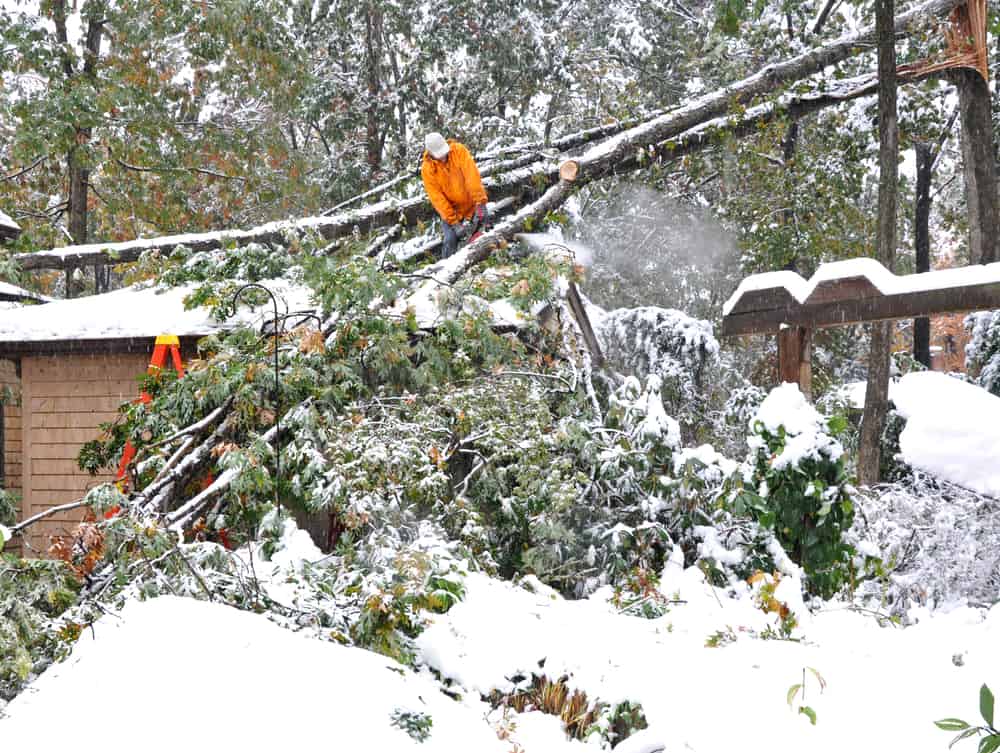
The nor’easter season runs roughly from October through April, and tropical storm remnants can affect Long Island from July through October. That’s effectively a year-round storm threat. Structural pruning — the kind that removes competing leaders, eliminates branches with narrow crotch angles, and thins overcrowded canopies — is the standard approach for building storm-resistant trees. It’s not the same as topping, which is harmful to tree health and widely condemned by arborists. Proper structural work done before a storm season is far less expensive than emergency removal after one.
Suffolk County’s municipality-by-municipality tree ordinances add another layer of complexity. Smithtown requires permits for removing, destroying, or substantially altering any tree on any parcel of real property. Huntington has its own restrictions. Violations in some municipalities can result in fines up to $10,000. If you’re planning any significant tree work — especially removal — it’s worth confirming the permit requirements for your specific town before anything gets cut. We know these ordinances and can help you navigate the process rather than leaving you to figure it out on your own.
When to Call a Tree Care Professional in Suffolk County
Knowing your trees — their species, their condition, their specific vulnerabilities in Suffolk County’s coastal and sandy-soil environment — puts you in a much stronger position than most homeowners. You can have a real conversation about what you’re looking at instead of just hoping for the best.
But there’s a point where identification and observation give way to professional assessment. If you have an ash tree that hasn’t been checked for EAB, a red oak showing signs of canopy dieback, a large tree with structural defects heading into storm season, or a removal situation where you’re not sure about permit requirements, that’s when it’s time to bring us in.
We’ve been doing this work in Suffolk County for 15 years. We’re licensed, insured, locally owned, and available 24/7 for emergency situations. If you have questions about a tree on your property — or you already know something needs to be done — give us a call and we’ll take a look.