Summary:
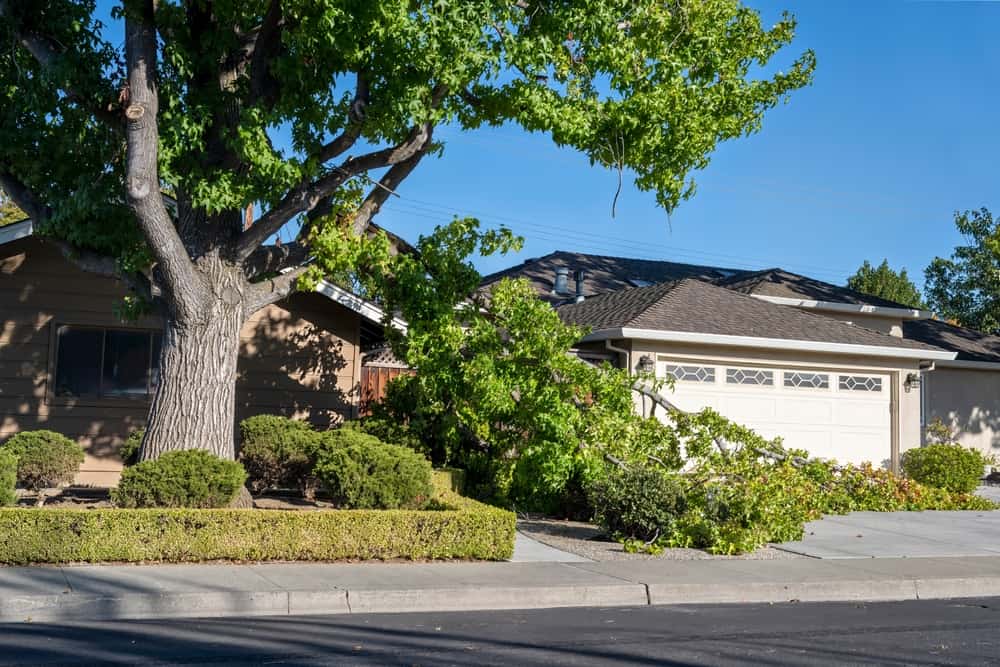
One minute everything is fine. Then a storm rolls through, you hear a crack, and suddenly there’s a tree sitting on your roof — and it came from your neighbor’s yard. The first instinct for most people is to call the neighbor and demand they fix it. That’s understandable. It’s also, in most cases, not how this works.
Before you make that call, before you move anything, and before you file a claim the wrong way, there are three things you need to do. Getting the sequence right protects your home, your claim, and your relationship with the person next door. Here’s what actually matters in the next few hours.
If a Neighbor's Tree Falls on My House, Who Is Responsible?
This is the question everyone asks first, and the answer surprises most people. Under New York law, if a tree falls because of a storm — wind, rain, a nor’easter coming off Long Island Sound — the tree owner is generally not liable for the damage it causes on your property. The legal standard comes from a New York Court of Appeals case, *Ivancic v. Olmstead*, which established that no liability attaches unless the tree owner had actual or constructive knowledge that the tree was dangerous.
In plain terms: if it was a healthy tree and a storm took it down, your neighbor didn’t do anything wrong. You file with your own homeowners insurance, they file with theirs, and the storm is treated as the cause — not the neighbor.
That said, there is an important exception, and it changes everything when it applies.
What If the Neighbor's Tree Was Already Dead or Diseased?
This is where the negligence exception comes in, and it’s the scenario where your neighbor can be held responsible. If the tree was visibly dead, rotting, leaning dangerously, or showing obvious signs of disease — and your neighbor knew about it or reasonably should have — then the legal picture shifts. The storm becomes less relevant. What matters is whether a reasonable person would have recognized the tree as a hazard and done something about it.
Proving this isn’t automatic, though. You need documentation. Photos of the tree before it fell, ideally timestamped. Any written communication you sent to your neighbor about the tree — a certified letter works best because it creates a paper trail. An arborist’s report, if you had one done, carries serious weight with both insurance companies and attorneys.
If you never formally notified your neighbor and you’re now looking at a downed tree on your roof, you’re not necessarily out of options, but your position is weaker. Going forward, if you ever have concerns about a tree on a neighboring property, put it in writing. Send a letter with photos. Keep a copy. That single step is what separates a successful negligence claim from a frustrating dead end.
One more scenario worth knowing: if the tree trunk sits on the property line, it’s considered a boundary tree and is legally co-owned by both of you. Removal requires mutual consent, and liability is shared. This situation is less common, but it comes up enough in Suffolk County’s older residential neighborhoods — where property lines and mature tree canopies don’t always align neatly — that it’s worth understanding.
Neighbor's Tree Fell on My Fence — Does the Same Rule Apply?
Yes, the same act-of-nature rule applies to fences. If a storm brought the tree down, you’re filing with your own homeowners insurance under the “other structures” portion of your policy, which typically covers detached structures like fences, sheds, and garages. The neighbor isn’t automatically responsible just because the tree originated in their yard.
That said, fence claims often involve lower payout thresholds than structural damage to a house, and the debris removal portion of your policy is worth looking at closely. Many standard homeowners policies cap debris removal coverage at $500 to $2,000 per tree — which sounds like a lot until you’re dealing with a large oak that requires a crane to lift off a fence line. In Suffolk County, where mature trees in communities like Setauket, Coram, and Port Jefferson can easily exceed 60 feet, that cap gets hit faster than most people expect.
Before you start cutting anything up or hauling debris, document everything. Walk the perimeter. Take photos of the fence from multiple angles, including shots that show the neighboring property and the base of the tree. Capture the full length of the damage. Your insurer’s adjuster will want to see the scope of the loss before cleanup begins, and gaps in your photo record can complicate the claim.
The negligence exception applies here too. If that fence-crushing tree was clearly dead and your neighbor ignored it, the same documentation logic applies — prior written notice, photos of the tree’s condition, and ideally a professional assessment. A certified arborist’s report that speaks to the tree’s structural state before it fell carries real weight when you’re trying to shift responsibility to the neighbor’s insurer.
Whose Insurance Pays When a Neighbor's Tree Falls on My House?
In the vast majority of storm-related cases, you file with your own homeowners insurance. Your policy covers the structural damage to your house. Your neighbor’s policy covers damage to their property. The storm is the cause, not the neighbor, and insurance companies treat it accordingly.
The exception — again — is negligence. If you can demonstrate that your neighbor knew the tree was hazardous and failed to act, you may be able to file against their liability coverage instead. But that requires documentation, and it often requires some back-and-forth between insurers. It’s not a quick process.
What you do in the first few hours matters a lot for how smoothly that claim goes.
The 3 Things to Do Immediately After a Neighbor's Tree Hits Your House
The first thing to do is make sure everyone is safe and stay out of the structure if there’s any doubt about its stability. A tree on a roof isn’t just a removal problem — it’s an active structural event. The weight stresses rafters, and if wind or additional rain is in the forecast, the situation can get worse before it gets better. If power lines are involved, call PSEG Long Island immediately and keep everyone well clear. Do not attempt to move or cut the tree yourself.
The second thing to do is document before you touch anything. This is where most people make a costly mistake — they start clearing debris out of stress or practicality, and in doing so they erase the evidence their insurer needs. Walk around the property and photograph everything: the point of impact, the tree’s root system, the full length of the tree, the damage to the structure, and the base of the tree on your neighbor’s side if you can safely access it. Take more photos than you think you need. Then call your insurance company and report the claim.
The third thing to do is call a licensed, insured tree service — and do it sooner rather than later. In Suffolk County, after any significant storm event, tree services get flooded with calls. The homeowners who have a professional on-site first are the ones who get their hazard addressed, their damage properly documented, and their property secured against further loss. Waiting even 24 to 48 hours can mean more water infiltration, more structural stress, and a more complicated claim. Suffolk County has received 13 federal disaster declarations since 2000 — this isn’t a rare scenario here. It’s a recurring one, and moving quickly is how you protect yourself.
How Professional Tree Removal Connects to Your Insurance Claim
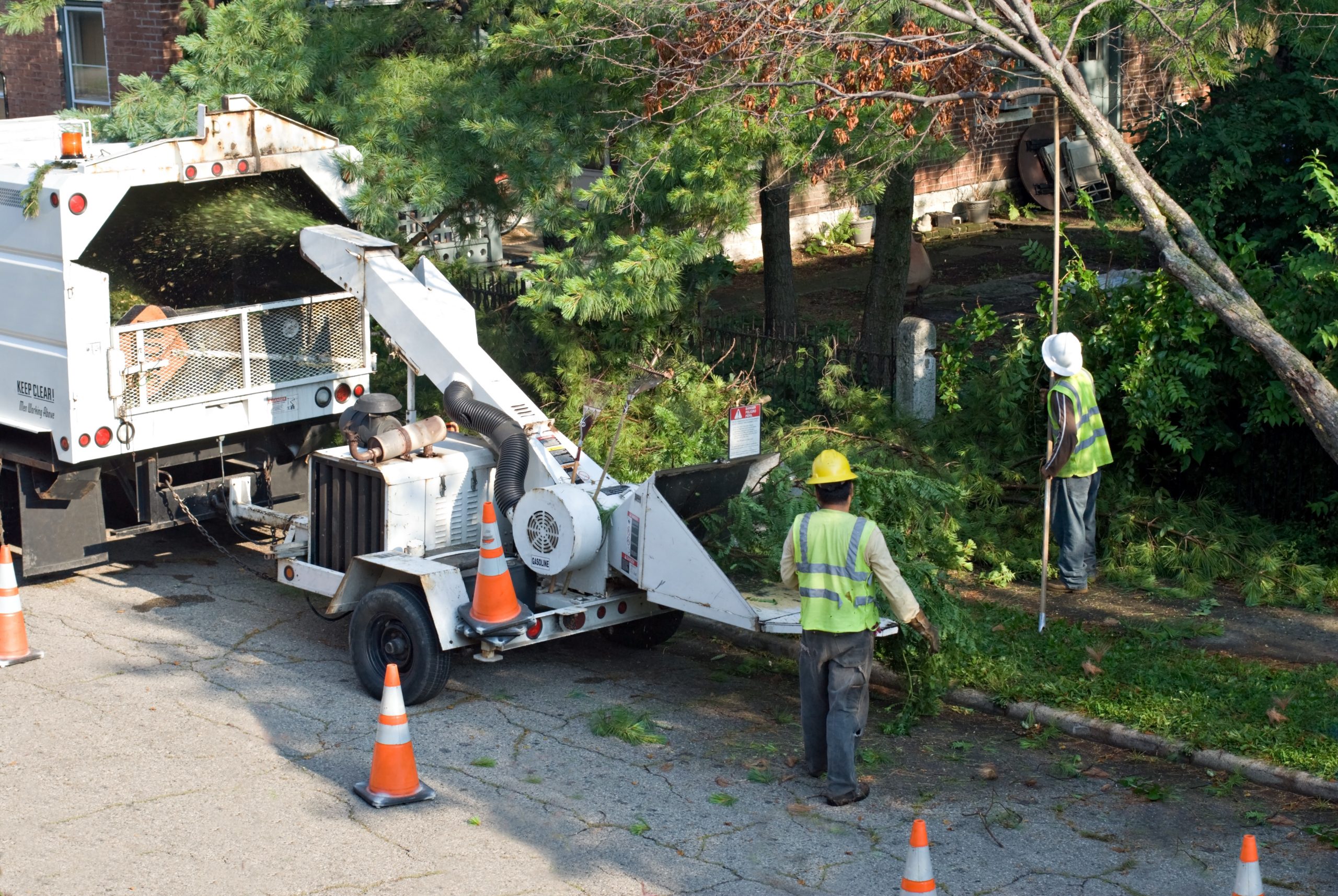
Most homeowners don’t realize that how the tree gets removed can directly affect their insurance claim. Attempting to remove a tree from a structure yourself — or hiring an uninsured crew to do it cheaply — can create problems. Some policies specifically require professional removal for storm damage claims, and if something goes wrong during a DIY removal, you’re looking at additional damage that may not be covered.
There’s also a documentation angle that most people overlook. A professional tree service can provide detailed records of the damage — the tree’s position, the structural impact, the scope of the removal — that insurance adjusters recognize and accept. That paperwork is part of the claim, and having it done right the first time makes the process significantly smoother.
The New York State Department of Environmental Conservation advises homeowners to verify that any tree service they hire carries both liability insurance and workers’ compensation coverage. This matters more than it sounds. If an uninsured worker is injured on your property during removal, you can be held financially responsible. In an already stressful situation, that’s an exposure you don’t need.
We’ve been doing this work in Suffolk County for 15 years, and one of the things we hear most from homeowners after a storm is that they didn’t know we could help with the insurance side of things. We can. We assist with documentation — detailed records of the damage that give your adjuster a clear picture of what happened and what it took to fix it. That’s part of what we do, not an add-on. For homeowners in Port Jefferson, Smithtown, Brookhaven, Islip, and across Suffolk County, that combination of fast emergency response and insurance support is often what makes the difference between a smooth claim and a prolonged headache.
What to Do After a Neighbor's Tree Damages Your Property in Suffolk County
The short version: your neighbor probably isn’t automatically responsible, your own insurance likely covers it, and the steps you take in the first hour matter more than most people expect. Document everything before cleanup starts, call your insurer to open the claim, and get a licensed professional on-site to handle the removal safely and produce the records your adjuster needs.
Suffolk County’s storm exposure is real — nor’easters off Long Island Sound, saturated spring soil, and hurricane season all create the conditions where healthy trees come down without warning. Knowing what to do before it happens puts you in a much better position when it does.
If a tree has already come down on your property, or you want someone to assess a tree you’re concerned about before it becomes a problem, Miguels Tree Service is available 24/7 for emergency response across Suffolk County. We’re licensed, insured, locally operated, and we’ve been handling exactly these situations for over 15 years.