Summary:
You’ve got a tree that needs to come down. Maybe it’s leaning the wrong way, maybe a storm cracked it, maybe it’s just been dead for two years and you’ve been putting it off. You call around, get a few numbers, and suddenly you’re staring at quotes that are nowhere near each other — and you have no idea which one to trust.
That confusion is completely normal. Tree removal pricing isn’t arbitrary, but it’s also not obvious. There are real reasons estimates vary, and once you understand them, the whole process gets a lot less stressful. Here’s what’s actually behind the numbers.
What Determines the Cost of Tree Removal in Suffolk and Nassau County
The biggest driver is almost always size. A 20-foot ornamental tree in a Smithtown backyard is a very different job than a mature 70-foot oak hanging over a Huntington roof. Taller trees require more labor, more rigging, and more time — and the trunk diameter matters just as much as the height. A wide, heavy trunk on a mid-sized tree can push the cost closer to what you’d expect from something much larger.
Location on the property is the other factor most homeowners don’t think about until they see the estimate. A tree in an open area is straightforward. A tree wedged between a fence, a pool, and a detached garage requires careful sectional cutting, precision rigging, and sometimes a crane — all of which add cost. Accessibility for equipment matters too. If our crew can’t get a chipper truck close to the work zone, that changes how the job gets done.
Why Tree Condition and Species Affect What You'll Pay
A healthy, structurally sound tree is predictable. A dead, diseased, or structurally compromised tree is not — and that unpredictability costs more to manage safely. When a tree has internal decay, we can’t always tell how it will behave once cutting starts. That means slower, more deliberate work, more protective measures, and more time on the job.
Species matters more than most people realize, especially across Suffolk and Nassau County. Large oaks — which are everywhere from Brookhaven to Southampton — are dense, heavy, and often massive in spread. They take significantly longer to remove than a similarly sized maple or cedar. If you have a mature oak close to your house, expect the estimate to reflect that reality.
Beech trees are worth mentioning specifically right now. Beech Leaf Disease has been spreading across Long Island for several years, and a lot of homeowners are dealing with American Beech trees that are declining faster than expected. A diseased beech with compromised branch structure requires more caution during removal — and that caution is built into a legitimate estimate.
Dead trees, while they might seem easier to remove, are often more dangerous. Brittle wood breaks unpredictably. Root systems may already be failing. A dead tree that’s been standing for a few seasons can be structurally unstable in ways that aren’t visible from the ground. When we assess a dead tree, we’re accounting for that uncertainty — and you want us to.
The Add-Ons That Catch Long Island Homeowners Off Guard
This is where a lot of estimates fall apart in the comparison phase. Two quotes can look very different not because one company is overcharging, but because they’re scoping different things.
Stump grinding is almost never included in a base tree removal quote unless explicitly stated. Once the tree is down, the stump is still there — and grinding it out is a separate service with its own cost. If you’re planning to replant, lay sod, or just don’t want a trip hazard in your yard, ask upfront whether stump removal is in the estimate or not.
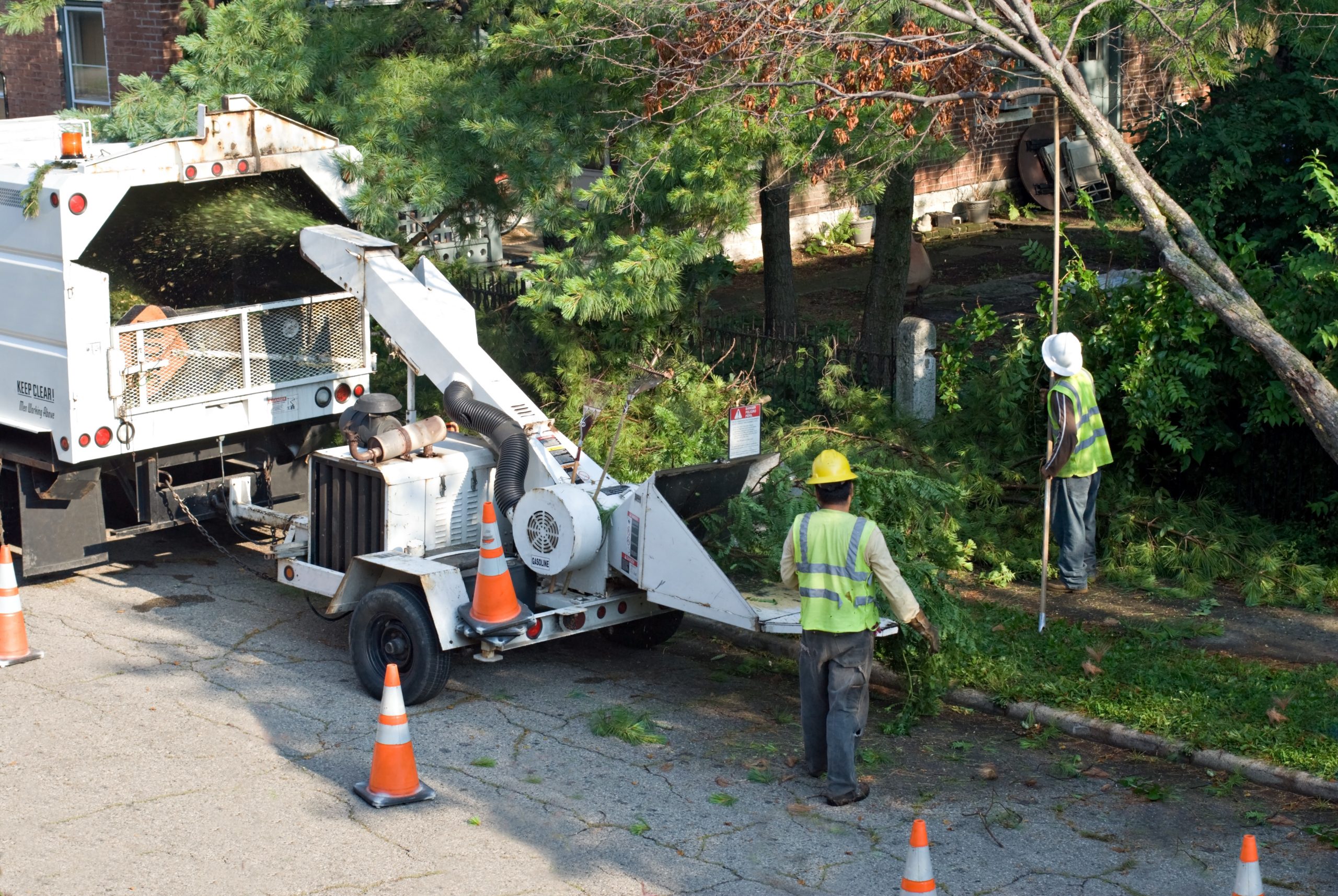
Debris removal is another common variable. We haul everything away as part of our standard service, but not all companies do. Some leave the wood and chips for you to deal with, or charge separately for hauling. If you’re in a neighborhood with HOA guidelines or tight lot lines — which describes a lot of Nassau County communities — leaving a pile of debris isn’t really an option. Confirm what cleanup looks like before work starts.
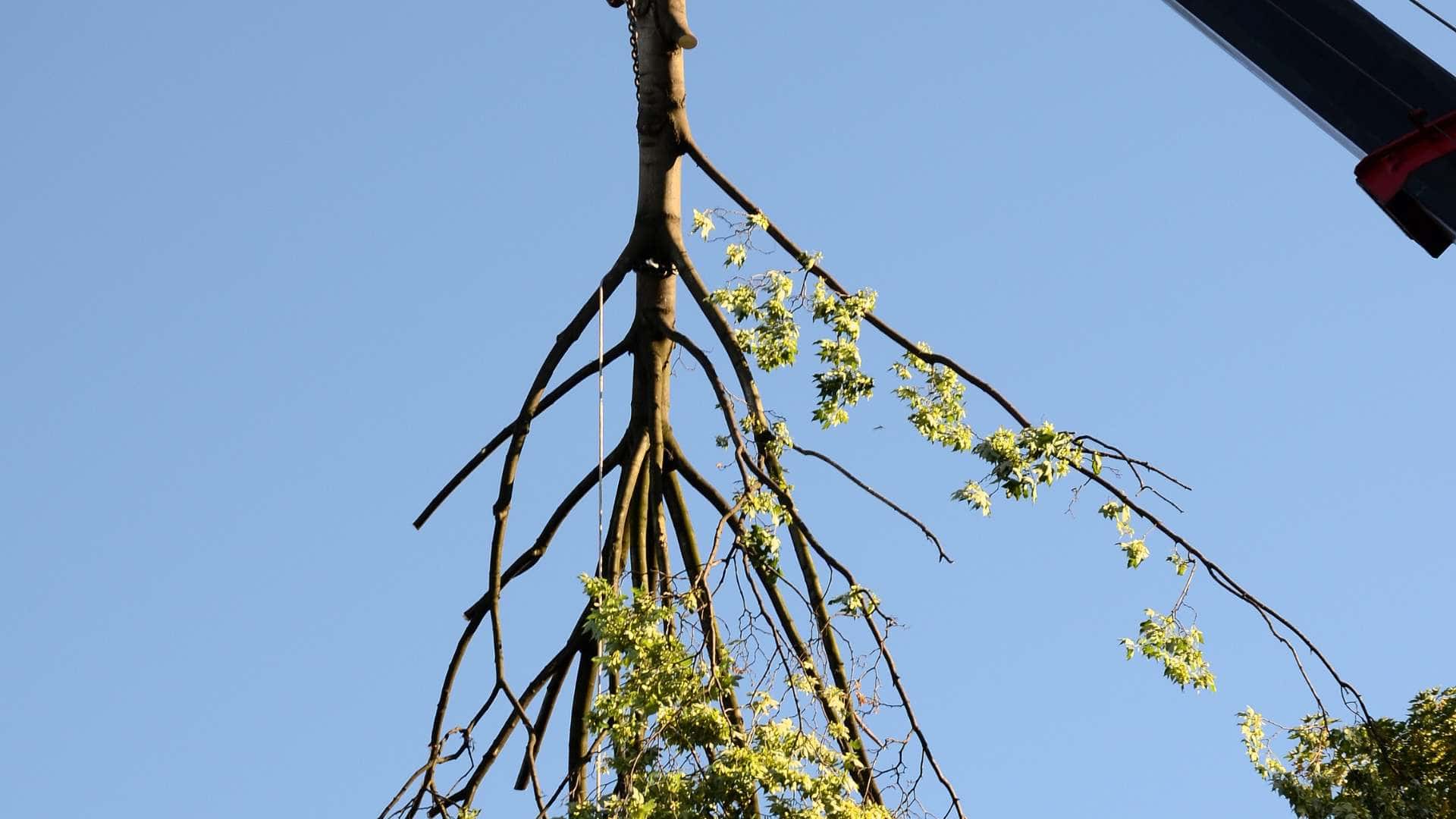
Crane-assisted removal is a line item that surprises a lot of homeowners the first time they see it. For large trees in tight spaces — think a massive oak near a house in Islip or a towering tree overhanging a Nassau County property with zero clearance — a crane is sometimes the only safe way to remove the tree in sections without risking damage to the structure below. It’s not a upsell. It’s the right tool for a specific kind of job, and it will be reflected in the estimate.
Finally, permit fees. More on that in a moment, but any legitimate estimate for tree removal in Suffolk or Nassau County should account for whether a permit is required — and if it is, what that process looks like.
Tree Removal Permits in Suffolk and Nassau County: What You Actually Need to Know
This is the part that catches people off guard more than almost anything else. A lot of Long Island homeowners assume that a tree on their property is theirs to remove, no questions asked. That’s not always true.
Permit requirements vary by township across Suffolk County — and the rules in Huntington are not the same as the rules in Brookhaven, Smithtown, or Islip. Nassau County townships have their own requirements on top of that. In many areas, any tree over a certain trunk diameter requires a permit before it can be removed, regardless of whether it’s in your front yard or your backyard.
What Happens If You Skip the Permit for Tree Removal on Long Island
The short answer: it can get expensive fast. Fines for unpermitted tree removal in Nassau County can reach up to $10,000 depending on the situation. Suffolk County townships have their own enforcement mechanisms, and complaints from neighbors — especially in dense residential areas — do get investigated.
The permit process itself isn’t always complicated, but it does take time. Standard applications in Nassau County typically take somewhere between 10 and 20 days to process, and fees generally run $50 to $200 depending on the municipality. Emergency permits for genuinely hazardous situations can sometimes be expedited, but that’s not a guarantee.
What this means practically is that if you’re planning a removal and not in an emergency situation, building permit lead time into your timeline is just smart planning. We’ve been working across Suffolk and Nassau County for 15 years, so we know which townships require permits, what the thresholds are, and how to move the process along. That local knowledge is part of what you’re getting when you hire a tree service with real roots in this market — not a company that showed up after the last storm and doesn’t know Huntington’s rules from Riverhead’s.
If a company quotes you for tree removal without ever mentioning permits, that’s worth asking about. Either the job doesn’t require one — which is possible — or they’re not thinking about it, which is a problem you don’t want to inherit.
How to Read a Tree Removal Estimate and Know If It's Legitimate
Getting three quotes is standard advice, and it’s good advice. But knowing how to compare them is the part nobody explains.
When quotes vary widely — and across Suffolk and Nassau County, it’s not unusual to see a $700 quote and a $2,200 quote for the same tree — the difference usually comes down to one of a few things. The scope is different. One company is including stump grinding and full debris removal; another is quoting removal only. The risk assessment is different. One crew has accounted for the proximity to your fence line; another hasn’t looked closely enough. Or the legitimacy is different. An uninsured crew working without workers’ compensation coverage can quote lower because they’re not carrying the overhead a legitimate operation requires — but if someone gets hurt on your property, that becomes your problem.
Ask every company you’re considering for proof of general liability insurance and workers’ compensation coverage before work starts. This isn’t being difficult — it’s protecting yourself. Tree work is a high-risk occupation, and a homeowner who hires an uninsured crew can be held liable for injuries that happen on their property. That risk is real.
The ISA Certified Arborist credential is worth asking about too. It’s not just a title — it requires passing a rigorous exam covering tree biology, risk assessment, pruning standards, and safety, plus ongoing education to maintain. When a certified arborist is the one assessing your tree and building your estimate, the quote reflects actual knowledge of what the job involves. That’s different from a crew that eyeballs the tree from the driveway and throws out a number.
A written, itemized estimate is non-negotiable. Verbal quotes are easy to misremember and impossible to hold anyone to. If a company won’t put the scope in writing before work begins, that’s a reason to keep looking.
Getting a Fair Tree Removal Estimate on Long Island Starts With Asking the Right Questions
Tree removal doesn’t have to feel like a gamble. When you understand what drives the cost — size, condition, access, species, add-ons, permits — you’re in a much stronger position to compare estimates honestly and make a decision you feel good about.
Long Island’s combination of mature housing stock, storm exposure, and township-level permit variation makes this market genuinely different from anywhere else. The trees here are older, the lots are tighter in Nassau County, the soil in coastal Suffolk is shallower than it looks, and the regulatory landscape changes from one town to the next. That context matters when you’re choosing who to trust with a job that involves heavy equipment, your property, and your safety.
If you’re ready to get a straight answer on what your removal will actually involve, we’ve been doing this work across Suffolk and Nassau County for 15 years. Reach out for a free estimate and we’ll give you a clear, honest breakdown — no surprises.