
Summary:
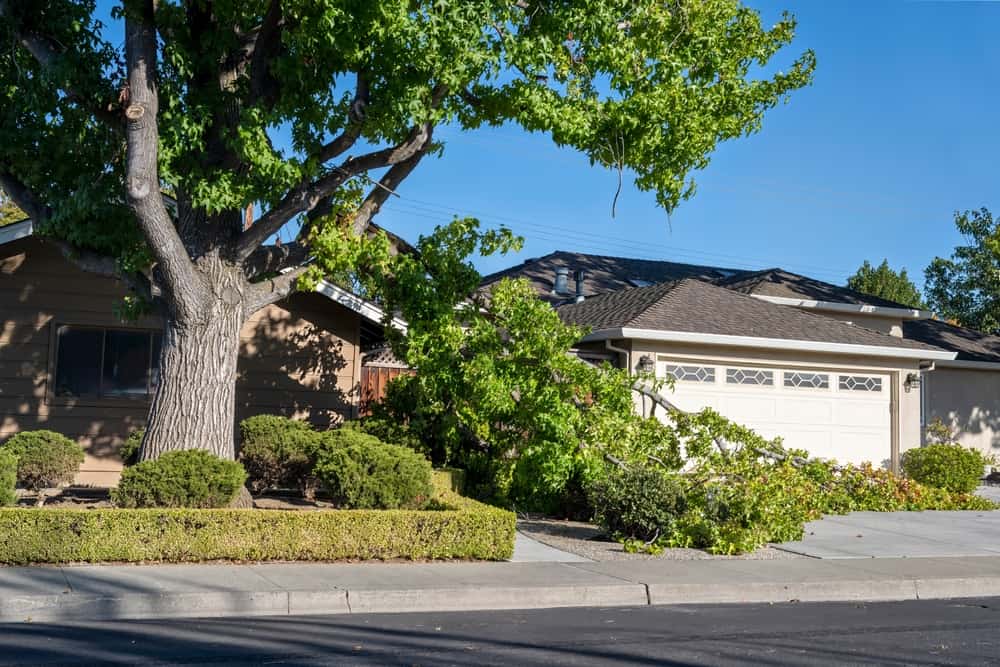
A tree came down on your house. Maybe it was last night’s storm, maybe it happened while you were at work — either way, you’re staring at a damaged roof, a pile of debris, and a neighbor whose tree is clearly the culprit. The first question most people ask is: doesn’t their insurance have to cover this?
The honest answer is: not automatically. And the gap between what most homeowners assume and what New York law actually says is wide enough to cost you thousands. Here’s what you need to know — and what to do about it.
Neighbor's Tree Fell on My House — Whose Insurance Pays?
This is the part that surprises almost everyone: in most cases, your own homeowners insurance pays for the damage — even when the tree came from your neighbor’s yard. That’s not a loophole or an unfair rule. It’s how property insurance is designed to work in New York.
Your neighbor’s liability coverage only comes into play if they were negligent — meaning they knew, or reasonably should have known, that their tree was dead, diseased, or structurally compromised, and they failed to do anything about it. If the tree was healthy and a nor’easter took it down, that’s generally considered an act of God. No liability attaches.
So the first call after a tree falls on your house isn’t to your neighbor. It’s to your own insurance company.
What "Negligence" Actually Means for Tree Liability in New York
New York’s Court of Appeals established the controlling standard years ago: no liability attaches to a landowner whose tree falls and injures another person or property unless there was actual or constructive knowledge that the tree was in a hazardous condition. That’s the legal threshold. Everything else flows from it.
Actual knowledge means someone told your neighbor — ideally in writing — that their tree was a problem. Constructive knowledge means the hazard was so visible that a reasonable person walking past it would have recognized the danger. A tree that’s visibly rotting at the base, listing at a severe angle, or dropping large dead limbs in every storm qualifies. A tree that looked perfectly healthy until a Category 1 wind event snapped it in half probably doesn’t.
This distinction matters enormously for what happens after the tree falls. If your neighbor had no idea the tree was compromised, they’re generally not on the hook — even if it’s their tree, and even if it landed squarely on your living room. Your insurer pays, handles the claim, and that’s often the end of it.
But if your neighbor did know — or if the signs were obvious enough that they should have known — the calculus changes. Your insurer may still pay out initially, but they can then pursue what’s called subrogation: going after your neighbor’s liability coverage to recoup what they paid. You don’t have to sue your neighbor yourself. The insurance companies work it out between themselves.
The practical takeaway here is that documentation is everything. If you’ve ever looked at a neighbor’s tree and thought “that thing is going to fall someday,” the most protective thing you can do is put it in writing before it happens. A certified letter with photos documenting the condition of the tree creates a clear paper trail — evidence that your neighbor had actual notice of a hazardous condition. That one document can be the difference between a covered claim and a disputed one.
Signs a Neighbor's Tree Was Already a Problem Before It Fell
Courts and insurance adjusters don’t expect homeowners to be arborists. But they do expect that obvious warning signs would be noticed. If any of these were visible before the tree fell, they can support a negligence argument against your neighbor.
A trunk that’s visibly tilted or leaning toward a structure is one of the clearest indicators. So is a tree with large sections of dead or bare branches — particularly when surrounding trees of the same species are leafed out normally. Cracks or splits in major limbs, fungal growth at the base, soft or spongy wood, and significant root damage from construction or soil erosion are all signs that a tree’s structural integrity is compromised.
In Suffolk County, this matters more than most places. Long Island’s coastal storms — nor’easters that track up the Eastern Seaboard, tropical systems that follow the Atlantic coast, and fast-moving summer thunderstorms — don’t give trees a gentle test. They expose every structural weakness at once. A tree that’s been slowly dying for two or three years can look passable in September and come down on your roof in October.
The aftermath of Hurricane Sandy in 2012 illustrated this perfectly. Thousands of trees across Suffolk County were structurally damaged but still standing. Many of them came down in subsequent storms — sometimes years later — because the root systems and internal wood had been compromised in ways that weren’t always visible from the outside. Homeowners who had documented those concerns in writing before subsequent storms had a much stronger position when it came to liability and insurance claims.
If you’re not sure whether a tree on a neighboring property is genuinely hazardous, a professional arborist assessment gives you something concrete. It documents the condition of the tree in terms that insurance companies and courts recognize — which is worth a great deal more than a neighbor’s assurance that “the tree looks fine to me.”
Tree from Neighbor Fell in My Yard — Now What?
Here’s a scenario that catches a lot of homeowners off guard: the tree came down, it made a mess, but it didn’t hit your house, your fence, or your car. It’s just sitting in your yard. Who pays to clean it up?
In most cases, you do. Homeowners insurance typically covers tree removal costs when a fallen tree damages an insured structure — a roof, a shed, a fence, a deck. If the tree landed in the yard without hitting anything, most policies won’t cover the removal. You’re paying out of pocket, regardless of whose tree it was.
That’s a hard answer, but it’s the accurate one. And it’s worth knowing before you’re in that situation.
Neighbor's Tree Branch Fell in My Yard — Do I Have Any Options?
When it’s a branch rather than a whole tree, the same general rules apply — but there are a couple of nuances worth understanding.
First, you have the legal right to trim branches from a neighbor’s tree that overhang your property, up to the property line. You don’t need their permission. You do, however, pay for that trimming yourself — your neighbor isn’t legally required to reimburse you for it. And you can’t cut beyond the property line or do anything that would damage the tree’s health or structural integrity.
Second, if a branch falls in your yard and doesn’t damage anything, cleanup is your responsibility. If it damages a structure — your fence, your car, your deck — then the coverage question loops back to the negligence standard. Was the branch visibly dead or diseased? Did your neighbor know about it? If so, there’s a potential liability argument. If it was a healthy branch that came down in a windstorm, your own insurance handles it.
One scenario that comes up frequently in Suffolk County’s denser residential areas — particularly in communities like Huntington, Smithtown, and the Brookhaven townships — is overhanging canopy from mature oaks and maples that have been growing for decades. Property lines in older Long Island neighborhoods weren’t designed with 80-foot trees in mind. When those trees drop major limbs, the damage and the legal questions can get complicated quickly. The cleaner your documentation is before something falls, the better your position after.
What If a City-Owned Tree Falls on My Property in Suffolk County?
Street trees — the ones planted between the sidewalk and the curb — are typically owned and maintained by the municipality, not the adjacent homeowner. If one of those trees falls on your property in Suffolk County, the liability question shifts to the town or village.
But here’s the catch: municipal liability in New York follows the same knowledge standard as neighbor liability. The municipality is generally not liable unless it had prior notice that the tree was hazardous. If the tree was healthy and a storm took it down, the municipality’s “act of God” defense usually holds. If the tree was visibly rotting and residents had reported it — or if the town’s own inspection records show they knew about it — then there’s a much stronger argument for municipal liability.
The practical step, if you have a street tree near your property that concerns you, is to report it in writing to your town’s highway or public works department and keep a copy of that report. In Suffolk County, that means contacting the relevant town — whether that’s Brookhaven, Huntington, Islip, or another municipality — and creating a paper trail. Verbal complaints don’t carry the same legal weight.
It’s also worth knowing that when a fallen tree involves power lines, PSEG Long Island handles the line-clearance side of the response. But the tree itself — and the property damage it caused — is a separate matter from the utility’s response. Don’t assume PSEG Long Island’s involvement means the liability question is resolved. It isn’t. Those are two different issues, and you’ll need to address the property damage claim independently through your insurance company or the municipality.
After a Tree Falls on Your House, Here's What Actually Matters
The legal framework here isn’t complicated once you understand it — but it does require you to act quickly and document everything. Photograph the tree, the damage, and any visible signs of decay or prior damage before anything is moved. Contact your insurance company before your neighbor. And if negligence is a factor, let your insurer pursue subrogation rather than trying to navigate a neighbor dispute on your own.
If a tree is still standing in a neighbor’s yard and you’re worried about it, don’t wait. A written notice with photos — sent in a way you can document — creates the legal paper trail that matters if the tree eventually comes down.
When you need someone on the ground in Suffolk County who can assess the situation, remove the tree safely, and provide documentation your insurance adjuster will actually accept, we’re available 24 hours a day. Miguels Tree Service has 15 years of experience in Suffolk County, and we’re licensed and insured. We’ve seen every version of this situation. Give us a call.