Summary:
You’ve got a tree situation — maybe a storm knocked something loose, maybe a massive oak has been making you nervous for years, or maybe you just need a trim before things get out of hand. Whatever brought you here, you’re probably realizing that searching “tree service near me” gives you a long list and not much else to go on.
That’s the real problem. Not finding a company — finding the right one. In Suffolk County, where mature trees are everywhere and nor’easters are a fact of life, the difference between a qualified crew and an unqualified one matters a lot more than most people realize. Here’s what you actually need to know.
What to Look for in a Tree Service Near You in Suffolk County
Most homeowners start with price. That’s understandable, but it’s also how people end up in trouble. A low quote from an uninsured crew might look like a deal until someone gets hurt on your property — and in New York, if an uninsured worker is injured while working on your land, you can be held responsible for their medical bills and lost wages. That’s not a hypothetical. It happens.
What actually matters when you’re vetting a tree service is straightforward: proof of general liability insurance and workers’ compensation, a written estimate before any work starts, and a track record you can verify on more than one platform. Reviews on Google are fine, but consistent feedback across Google, Angi, and Facebook tells a more complete story.
How to Know If a Tree Service Is Actually Licensed in Suffolk County
Suffolk County has a specific Home Improvement Contractor licensing requirement that most homeowners don’t know about. The county explicitly defines home improvement to include “landscaping and arboriculture, which as used herein shall mean tree sprayers, tree pruners, tree stump removers and all other tree services.” That means any professional tree service operating in Suffolk County is legally required to hold a county-issued contractor license — not just a general business registration, but a specific credential tied to this type of work.
This matters because it gives you a baseline. You’re not just hoping a company is legitimate — you can ask to see their license number and verify it. A company that’s been operating in Suffolk County for years, with a documented local presence and verifiable reviews, is far less likely to be cutting corners on compliance than someone who showed up after a storm offering a deal.
It’s also worth asking whether the crew includes ISA Certified Arborists. The International Society of Arboriculture requires candidates to have at least three years of documented experience in arboriculture — or a relevant degree — and pass a rigorous exam with a minimum score of 76%. That credential is accredited by the American National Standards Institute, which means it meets a recognized professional standard. Not every tree company employs certified arborists, and not every job requires one, but for complex work — large tree removal, hazard assessment, anything near a structure — it’s worth knowing who’s making the call.
One more thing worth mentioning: the BBB recommends never paying for a tree removal or trimming project in full until you’re completely satisfied with the work. A legitimate company won’t ask for the full amount upfront. If someone is pushing for full payment before they’ve started, that’s a red flag regardless of how good their pitch sounds.
Do You Need a Permit to Remove a Tree in Suffolk County?
This is one of the most common questions homeowners ask, and the honest answer is: it depends on where you live. For most residential properties in Suffolk County, no permit is required to remove trees under five inches in diameter on private property. But once you get into larger, more established trees — the kind that have been growing in your yard for decades — local regulations vary significantly by town and village, and they’re subject to change.
Port Jefferson Station falls within the Town of Brookhaven, which has its own tree preservation ordinances that apply on top of county-level rules. If you’re in Smithtown, Huntington, or one of the other towns that make up Suffolk County, the specific requirements may be different. This is one of the practical reasons it helps to work with a company that actually knows this area rather than one that’s just passing through.
The exception that applies almost everywhere is genuine emergency removal. When a tree is determined to be an imminent hazard — posing immediate risk to people or structures — emergency applications can typically be processed within one business day. After a nor’easter or a heavy ice storm, this matters. Long Island’s North Shore communities, including the Port Jefferson area, face elevated wind exposure from Long Island Sound, and the region has seen significant storm-related tree damage from events like Hurricane Sandy in 2012 and Tropical Storm Isaias in 2020. If you’ve been through either of those, you already know how fast a tree situation can go from “we should probably look at that” to “we need someone here today.”
The simplest approach is to work with a licensed local company that handles permit questions as part of the process. We’ve been operating in Suffolk County for over 15 years and know what’s required in your specific town — and we can tell you before you’re already committed to a plan.
Finding a Local Arborist Near You in Port Jefferson Station
There’s a difference between a tree service and a certified arborist, and it’s worth understanding before you make a call. A tree service handles the physical work — removal, trimming, stump grinding, cleanup. An arborist brings diagnostic knowledge: they can assess whether a tree is actually hazardous, identify disease or pest damage, and recommend the right course of action rather than just the most profitable one.
The best local tree services employ both — skilled crews who can handle the physical demands of the job and qualified professionals who know enough about tree biology to make sound decisions. For Port Jefferson Station, NY homeowners dealing with the mature oaks, maples, and white pines common throughout the North Shore, that combination matters.
Tree Trimming vs. Tree Pruning — What's the Difference?
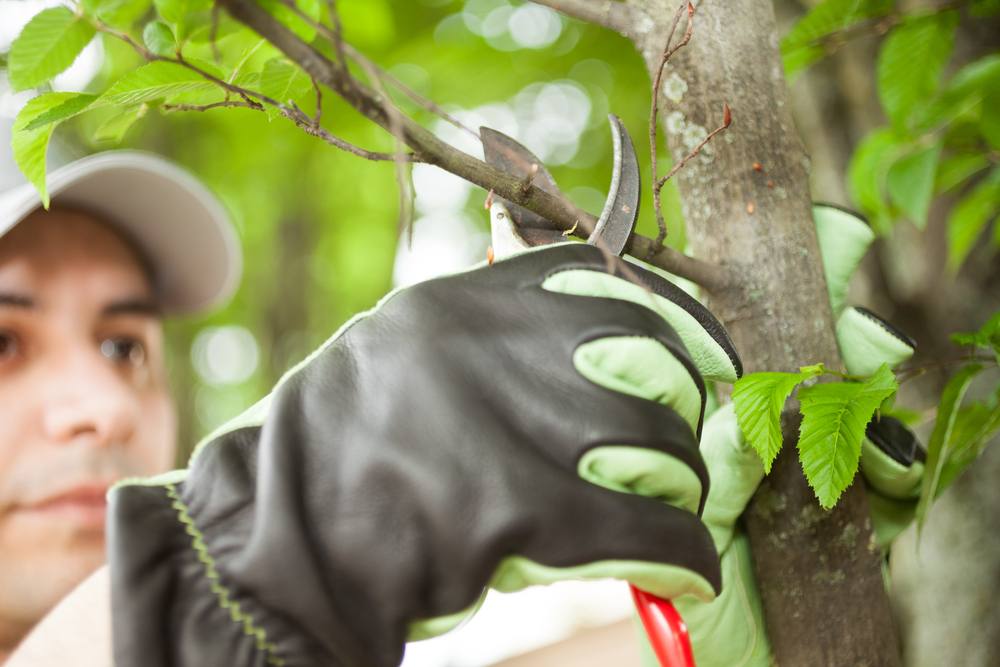
These two terms get used interchangeably, but they describe different things. Trimming is primarily about appearance — shaping a tree so it looks the way you want it to look, clearing branches that are growing where you don’t want them, keeping things tidy. Pruning is about the tree’s health. It involves removing dead, diseased, or structurally compromised branches to improve the tree’s long-term stability and reduce the risk of failure.
In practice, most homeowners need some combination of both. A tree that hasn’t been touched in years might have dead wood that needs to come out for safety reasons, plus overgrown branches that are encroaching on the house or blocking light. A qualified arborist can look at your specific trees and tell you which is which — rather than just trimming everything back and calling it done.
This distinction also matters when it comes to tree health over time. Improper trimming — particularly a practice called “topping,” where large sections of the crown are cut back indiscriminately — can seriously damage a tree and shorten its life. The ISA explicitly condemns topping as a harmful practice, and any reputable tree company will tell you the same. If someone quotes you on topping your trees as a solution, that’s worth a second opinion.
For homeowners in the Port Jefferson Station area, the local tree species add another layer. White oaks and red oaks are common throughout the North Shore and require specific timing for pruning to minimize disease risk — oak wilt, for example, spreads most easily during the growing season. An arborist who knows Long Island’s tree population understands these details. Someone who doesn’t may not.
What Happens When a Neighbor's Tree Becomes Your Problem?
This comes up more than most people expect, and it’s one of the more frustrating situations a homeowner can face. A tree on your neighbor’s property is dropping branches into your yard, roots are cracking your driveway, or — worst case — a dead tree is leaning toward your house and your neighbor isn’t doing anything about it.
In New York, liability in these situations is genuinely nuanced. The general principle is that if a property owner knew or reasonably should have known that a tree was hazardous, and failed to act, they may bear some liability for damage it causes. But “should have known” is the tricky part — it often comes down to whether the hazard was obvious and whether the affected neighbor gave notice.
This is where a professional arborist assessment becomes more than just a practical step — it becomes a legal one. A written assessment documenting the condition of a tree creates a paper trail. If you’ve formally notified your neighbor about a hazardous tree and have documentation of its condition, you’ve established that they were on notice. If something happens after that, the liability picture changes.
From the other direction: if you’re the one with the tree and a neighbor raises a concern, getting an arborist out to assess it is the responsible move. It either confirms the tree is fine — and gives you documentation to that effect — or it identifies a real problem you’d want to know about anyway. Either way, you’re better off knowing.
For Suffolk County homeowners specifically, this kind of dispute tends to escalate after major storms, when damage makes tree hazards suddenly visible. Having an established relationship with a local tree service — one that can get to your property quickly and provide a credible written assessment — is more useful than trying to find someone new in the middle of a post-storm scramble.
Hiring a Tree Service in Suffolk County: What It Comes Down To
At the end of the day, the right tree service is the one you can actually trust — to show up when we say we will, to tell you what you need rather than what’s most profitable, to clean up completely when the job is done, and to carry the insurance that protects you if anything goes wrong.
In Suffolk County, that means working with someone who knows this area. Who understands the trees, the towns, the permit requirements, and the specific storm exposure that comes with living on the North Shore of Long Island. Generic experience doesn’t cover that. Local experience does.
If you’re looking for a tree service near Port Jefferson Station, NY that checks those boxes — licensed, insured, with over 15 years working in Suffolk County — we’re here to help. We offer same and next-day consultations, 24/7 emergency availability, and we leave every property broom clean. Reach out and we’ll take a look.